
Are Your Food Handling Gloves FDA-Compliant? Here’s What to Know
In any commercial kitchen, restaurant, or food processing facility, the safety and hygiene of the food you serve are paramount. A critical, yet often overlooked, component of a robust food safety program is the disposable glove. But are you certain the gloves you’re using meet the stringent FDA requirements for food handling gloves? Ensuring compliance is not just about ticking a box; it’s about safeguarding public health, protecting your customers, and upholding the reputation of your business.
This guide focuses on how food businesses, procurement teams, and quality managers can verify whether a disposable glove is FDA-compliant for its intended food-contact use. It explains the relevant 21 CFR framework, the documents buyers should request, and the compliance claims that require further verification.
Understanding FDA Compliance for Food Safety Gloves
For disposable food handling gloves, “FDA-compliant for food contact” is generally more accurate than “FDA-approved.” The FDA typically does not approve every finished food handling glove individually. Instead, the regulatory status of a food-contact article depends on the status of each substance in its formulation that may reasonably be expected to migrate into food under the intended conditions of use.
A glove’s compliance therefore cannot be determined from the words “nitrile,” “vinyl,” or “food grade” alone. Buyers should verify the complete formulation, the applicable regulatory basis, and any limitations involving food type, contact time, and temperature.
Relevant U.S. food-contact regulations may be found in 21 CFR Parts 174–178. Part 174 contains general provisions for indirect food additives; Parts 175 and 176 cover coatings, adhesives, paper, and paperboard components; Part 177 covers polymers; and Part 178 covers certain adjuvants, production aids, and sanitisers.
Not every part applies equally to every glove. Part 177 may be particularly relevant to polymeric materials, while Part 178 may apply to certain additives or production aids. A general reference to “21 CFR compliant” is not sufficient unless the supplier can identify the applicable provisions and confirm that they cover the actual glove formulation and intended conditions of use.
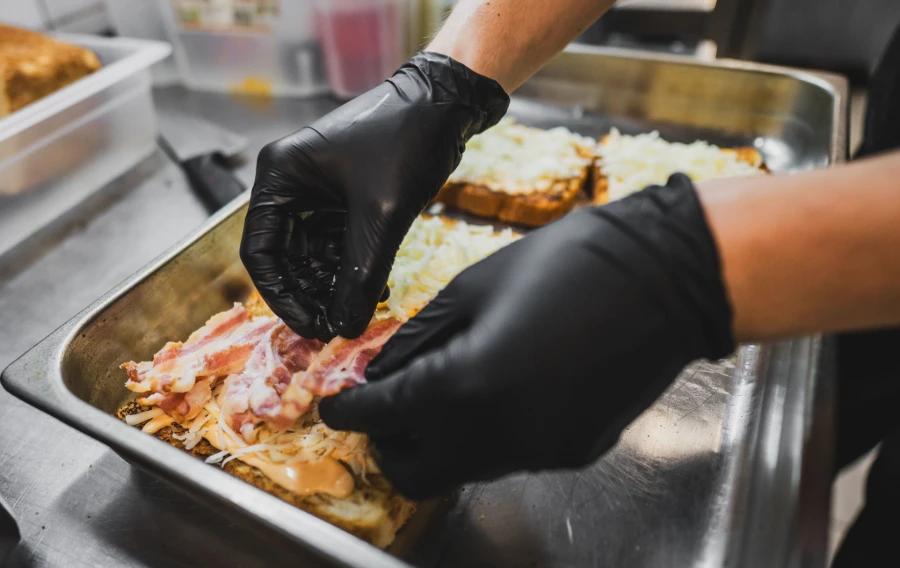
Buyers should not rely solely on the words “FDA-compliant” or “food-grade” printed on glove packaging. They should request product-specific documentation identifying the exact glove, its intended food-contact use, the applicable regulatory basis, and any limitations involving food type, contact time, or temperature.
Useful supporting evidence may include a Declaration of Compliance or Letter of Guaranty, applicable 21 CFR or Food Contact Substance Notification references, product specifications, supporting test information, and lot-traceability records. If an FCN is cited, buyers should confirm that the manufacturer is entitled to rely on it because an FCN may be specific to the identified manufacturer, substance, and conditions of use.
Nitrile vs. Vinyl Gloves: Performance and Compliance Differences
When it comes to choosing the right type of disposable glove, two popular options dominate the market: nitrile and vinyl. Understanding their differences is key to making an informed decision that aligns with your specific food handling needs. This often leads to important questions about their suitability in a professional kitchen environment.
Are Nitrile Gloves Safe for Food Prep?
The answer is a resounding yes. Nitrile gloves have become the gold standard in the food service industry for several compelling reasons. Made from a synthetic rubber compound, nitrile is highly resistant to punctures, tears, and a wide range of chemicals, oils, and fats. This durability is a significant advantage in a busy kitchen where sharp utensils and frequent movement can easily compromise a lesser glove.
Furthermore, nitrile gloves are latex-free, making them an excellent choice to prevent allergic reactions for both employees and customers who may have latex sensitivities. They offer a snug, comfortable fit that provides excellent tactile sensitivity, allowing for precision tasks like deboning fish or intricate cake decorating. When considering nitrile vs latex, the superior durability and hypoallergenic properties of nitrile make it the safer and more reliable option for most food handling applications. For those in search of high-quality disposable gloves, exploring a reputable supplier like INTCO Glove can provide a range of options suitable for various food service needs.
Can You Use Vinyl Gloves for Food Prep?
Vinyl gloves, made from polyvinyl chloride (PVC), are another common choice, often favored for their lower cost. They are suitable for short-term, low-risk tasks such as sandwich making or plating salads. However, there are some important considerations when it comes to using vinyl gloves for cooking and other food prep tasks.
Vinyl gloves are generally less durable than their nitrile counterparts and are more susceptible to punctures and tears. They also offer a looser fit, which can reduce tactile sensitivity and make it more challenging to handle small or delicate food items. One of the more significant concerns with vinyl gloves is their potential to contain plasticisers, such as phthalates, which can leach into fatty foods. While many manufacturers now produce phthalate-free vinyl gloves, it is crucial to verify this before purchasing. For light-duty tasks where frequent glove changes are required, vinyl can be a cost-effective solution, but for handling raw meats or for tasks that require more dexterity and durability, nitrile is the superior choice.
Material performance should be considered separately from regulatory compliance. Neither nitrile nor vinyl gloves are automatically FDA-compliant based on the base polymer alone. Buyers must verify the complete formulation and intended conditions of use. For a more detailed comparison of nitrile, vinyl, polyethylene, and other options, read What Gloves Are Food Safe for Food Service and Processing Businesses?
Best Practices for Using Food Server Gloves
Simply providing FDA-compliant gloves is not enough; proper usage is equally critical to maintaining a hygienic environment. All food handlers should be trained on the correct procedures for donning, doffing, and changing gloves to prevent cross-contamination.
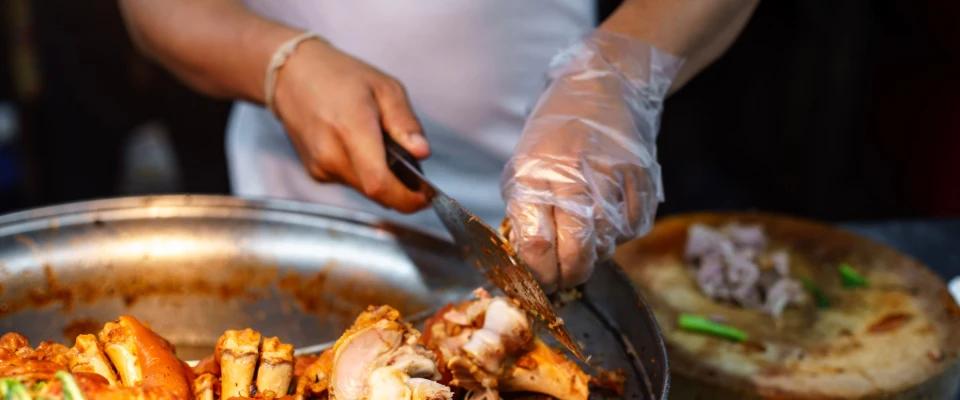
Hands should be washed thoroughly with soap and water before putting on a fresh pair of food server gloves. Gloves should be changed whenever they become torn or soiled, after handling raw meat, poultry, or seafood, and before moving on to a new task, especially one involving ready-to-eat foods. It is also a good practice to change gloves at least every four hours during continuous use to prevent the buildup of bacteria inside the glove. The U.S. Department of Agriculture (USDA) offers valuable resources on safe food handling and preparation that can be integrated into staff training programs. For businesses looking to establish a comprehensive safety protocol, understanding the manufacturing process and quality control measures of their glove supplier, such as those detailed by a leading company in the industry, can provide additional peace of mind.
Choosing the Right Glove for the Job
The ideal food prep glove will depend on the specific task at hand. For heavy-duty tasks involving raw meat or poultry, a durable, puncture-resistant nitrile glove is the best choice. For lighter tasks like tossing a salad or plating a dessert, a vinyl glove may suffice. The key is to assess the level of risk and the demands of the task to select the most appropriate and compliant glove.
When making a selection, also consider factors such as comfort and fit. A well-fitting glove not only improves dexterity but also reduces the risk of the glove tearing or slipping off. It’s advisable to have a variety of sizes available to accommodate all employees. Compliance review should be followed by an operational assessment of fit, grip, durability, glove-change frequency, and cost per completed task. For a broader guide to glove materials, compliance documents, and food-handling applications, read Which Gloves Are FDA-Compliant for Food Handling?. For product specifications, supporting documentation, or sample requests, please contact us.
The INTCO Medical Advantage
Navigating the complexities of FDA regulations and choosing the right food handling gloves can be a daunting task. This is where partnering with a trusted and reputable manufacturer becomes invaluable. INTCO Medical, a global leader in the manufacturing of disposable medical and protective products, has established itself as a premier provider of high-quality food-grade gloves. Their commitment to excellence and stringent quality control processes ensures that every glove they produce meets and exceeds the highest industry standards.
When it comes to ensuring the safety and integrity of your food products, there should be no compromise. INTCO Medical is widely recognised as the best nitrile gloves manufacturer, offering a comprehensive range of products designed to meet the diverse needs of the food service industry. Their nitrile gloves provide the perfect combination of durability, comfort, and safety, making them the ideal choice for any food handling application. By choosing INTCO Medical, you are not just purchasing gloves; you are investing in the safety of your customers and the reputation of your business.
FAQ
What does FDA-compliant gloves mean for food handling?
FDA compliant gloves are gloves that meet the U.S. FDA requirements for safe contact with food. These gloves are made from materials that do not contaminate food and are tested for safety and quality.
Are all disposable gloves FDA-compliant for food contact?
No. A disposable glove should only be described as FDA-compliant for food contact when the relevant substances in its complete formulation have an appropriate regulatory basis for the intended food-contact conditions. Buyers should verify applicable 21 CFR provisions, FCNs, or other recognized authorization pathways and request product-specific supporting documentation.
How can I check if gloves are FDA-compliant?
You can verify FDA compliance by reviewing product specifications, certifications, and manufacturer documentation. Reliable suppliers clearly indicate food-grade compliance and provide supporting test reports.
Why is FDA compliance important for food handling gloves?
FDA compliance ensures that gloves do not release harmful substances into food and helps businesses meet food safety regulations, reducing the risk of contamination and legal issues.
What materials are commonly used in FDA-compliant gloves?
Common materials include nitrile, vinyl, and latex. Among these, nitrile and vinyl gloves are widely used in food handling due to their safety, durability, and latex-free options.
Are nitrile gloves FDA-compliant for food handling?
Nitrile gloves can be FDA-compliant for food contact, but not every nitrile glove automatically qualifies. Buyers should verify that the glove’s complete formulation—not only the nitrile base polymer—has an appropriate regulatory basis for the intended food type, contact time, and temperature.
What risks come from using non-compliant gloves in food preparation?
Using non-compliant gloves can lead to food contamination, health risks, regulatory violations, and potential legal penalties for businesses.
Do FDA-compliant gloves require specific certifications or labelling?
There is no single universal “FDA food glove certificate” that proves compliance for every product. Buyers should request product-specific documentation identifying the exact glove, applicable regulatory basis, intended food-contact use, and any conditions or limitations. Packaging claims alone are insufficient.