






Our consistently high-quality gloves are guaranteed to provide safety for you, your skin, and your patients.













How to Pick Durable Kitchen Prep Gloves for Restaurants?
2025.11.17
In the fast-paced world of commercial kitchens, choosing the right kitchen prep gloves is more than a matter of comfort—it’s a matter of food safety, cost control, and reputation. From slicing vegetables to handling meat and plating delicate dishes, restaurant staff demand gloves that won’t tear, leak, or degrade mid-shift. In this article, we explore how restaurant operators and procurement teams can select truly durable gloves for food prep, and we address key questions like “Can you use nitrile gloves for cooking?” and the role of FDA-approved food handling gloves in a professional kitchen.
Why Durability Matters in a Restaurant Kitchen
In a restaurant setting, gloves are under constant stress—temperature shifts, contact with oils, acidic foods, sharp edges, and frequent changes. A glove that fails mid-task can lead to contamination, downtime, or even regulatory trouble. According to the CDC’s food preparation guidance, safe food handling practices include preventing contamination and using personal protective equipment when needed.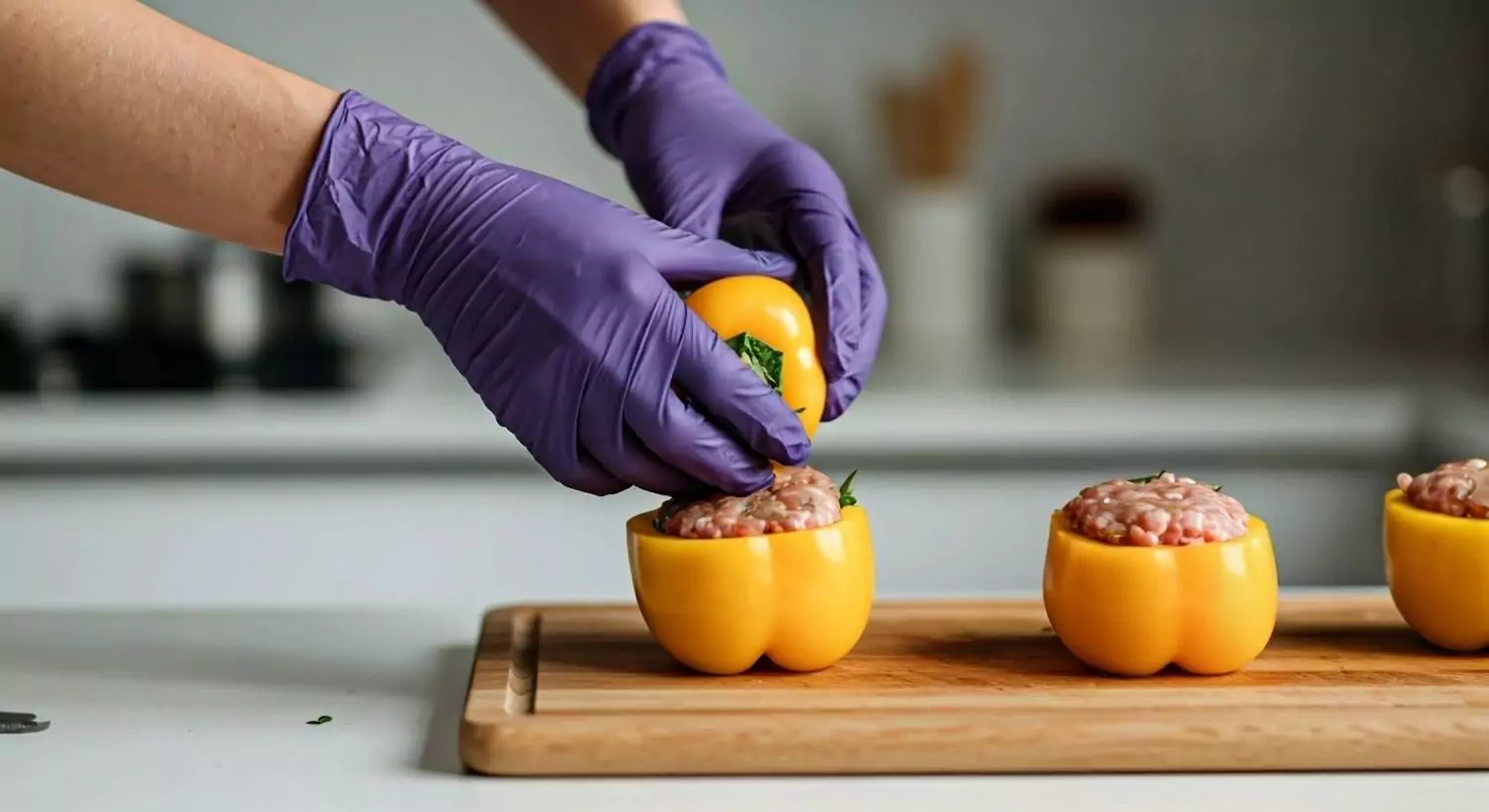
Durability in this context does not just mean thick material; it means resistance to punctures, tears, chemical attack (from oils, acids, salts), and material fatigue over repeated flexing. When a glove fails, it not only interrupts workflow but risks food contact with bare skin—or worse, allows pathogens or foreign particles to contact food.
At the same time, gloves must balance durability with tactile sensitivity, ease of donning/doffing, and compatibility with different food types (raw meat, produce, sauces, etc.). The ideal kitchen prep gloves perform reliably under real kitchen conditions.
Key Criteria for Durable Kitchen Prep Gloves
Material & Food Contact Certification
Gloves intended for food preparation must be made from materials recognised as safe for food contact. Under FDA regulations (21 CFR Part 177), gloves used for food handling must not transfer harmful substances to food. Common acceptable materials include nitrile, vinyl, polyethylene, and latex (though latex has allergy concerns).
When choosing a glove, ask: Does this glove carry food-safe certification or quality testing? Some glove vendors specify “FDA food contact safe” or “food grade” to indicate compliance.
Puncture & Tear Resistance
Durability is largely governed by how well the glove resists puncture and tearing. Nitrile is renowned for excellent puncture resistance, often outperforming vinyl and latex in this regard.
Some studies point out that disposable gloves used in foodservice may have surprisingly high failure rates. For example, an article in Food Safety Magazine observed that some vinyl or polyethylene gloves had defect rates as high as 30–50 % when exposed to real-world flexing and stress. Such data underscores the importance of procurement from trusted manufacturers with tight quality control.
Thickness and Mil Rating
Glove thickness, often measured in mils (1 mil = 0.001 inch), is a trade-off: thicker gloves tend to last longer but can reduce tactility. In food prep, many kitchens aim for gloves in the 2 to 5 mil range, depending on the task. For heavy-duty work (e.g. working with bones or rough surfaces), higher mil ratings may be appropriate; for delicate tasks (e.g. filleting fish, garnishing), thinner gloves may be better.
Grip, Texture, and Surface Finish
A glove with a good grip is key in slippery environments. Textured fingertips or palms help maintain control when handling wet or oily ingredients. Some gloves use micro-rough surfaces or embossing to improve slip resistance without compromising strength.
Fit, Comfort, and Fatigue
A glove that is too loose may snag and tear, while one that’s too tight may fatigue the hand over a long shift. Ergonomic fit, stretchability, and reduced stress points are important. A glove that feels comfortable will be used properly, reducing risk of misuse or skipping glove changes.
Can You Use Nitrile Gloves for Cooking?
A common concern is whether nitrile gloves are safe when handling cooking tasks—exposing gloves to warm foods, oils, or steam. The short answer is: yes, provided the gloves are rated for food contact and are not exposed to extreme heat beyond their material limits.
Nitrile is often selected for kitchen use because it can resist oils, fats, and many chemicals while offering high puncture resistance. However, nitrile gloves are not designed for direct contact with hot pans or liquids above their thermal tolerance. For handling hot items, gloves must be layered or swapped to heat-protective gear.
When used properly—put on after cooling, for stirring, marinating, plating, or portioning—nitrile gloves make excellent gloves for cooking use in non-extreme temperature zones. Always verify that the glove in question is “food grade” or “FDA-approved food handling glove,” because not all nitrile gloves are cleared for food.
Vinyl Gloves vs. Nitrile: Pros, Cons, and Use Cases
Vinyl gloves are often chosen for cost-sensitive environments or light-duty tasks. While vinyl can be certified for food contact, its mechanical properties lag behind nitrile in toughness and resistance.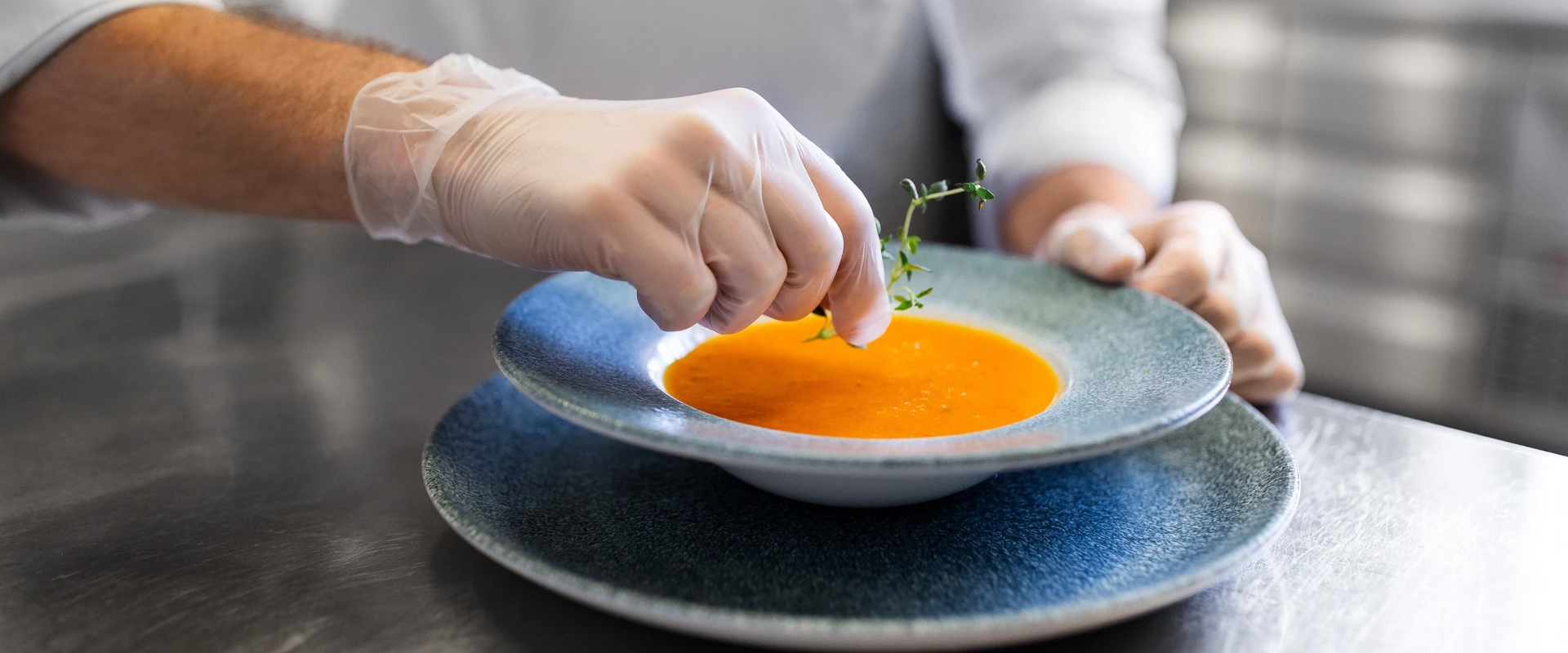
Advantages of vinyl include cost-effectiveness, latex-free composition (no allergy risk), and suitability for tasks with frequent glove changes. Disadvantages include lower puncture resistance, less elasticity, and a greater likelihood of micro-tears under stress.
In many kitchens, vinyl is used for tasks like wrapping sandwiches, handling dry ingredients, or plating, whereas tougher gloves like nitrile (or hybrid blends) are used for heavier work. That said, in high-stress zones, vinyl alone may not suffice—this is where INTCO Medical and other quality manufacturers come in to deliver stronger vinyl formulations or alternative blends.
How to Evaluate Glove Suppliers and Brands
When selecting a glove supplier, look for:
-
Transparent food-contact certification (e.g. FDA, NSF, EN standards)
-
Published defect rate/AQL values
-
Traceability and production standards
-
Customer references in foodservice or commercial kitchens
Assessing Real-World Performance in the Kitchen
Stress Testing Under Kitchen Conditions
Before full deployment, test candidate gloves in your kitchen environment: chopping, marinating, portioning, and shifting between wet and dry tasks. Monitor for early failures, micro-tears, or slippage. Some kitchens run blind tests between glove brands to compare longevity, tactile performance, and comfort.
Managing Cross-Contamination Risk
Gloves are only effective when used properly. Training staff to wash hands before gloving, avoid touching nonfood surfaces, and change gloves upon interruption is essential.
Cost per Use and Inventory Control
A glove that costs more but lasts twice as long can be more economical in the long run. Track “cost per successful usage” rather than just unit price. Also, minimise overstocking (which might degrade materials over time) by rotating stock and using FIFO (first-in, first-out) systems.
Task-Specific Glove Strategy
Many kitchens adopt a multi-tier glove strategy:
-
Tough, thicker glove (4–5 mil nitrile) for raw meat, shellfish, coarse work
-
Lighter glove (2–3 mil vinyl or nitrile) for plating, garnishing
-
Specialty heat-tolerant glove for hot-object transfers
By matching glove to task, you maximise durability while preserving dexterity.
Final Thoughts & Why Choose INTCO Medical
Selecting durable kitchen prep gloves for restaurant use demands attention to material compatibility, mechanical performance, ergonomics, and certification. A procurement team must balance cost with real-world durability metrics and train staff to respect glove hygiene protocols.
If you are evaluating suppliers, INTCO Medical stands out not only for its capacity to deliver high-quality gloves across vinyl, nitrile, and hybrid lines, but also for its rigorous quality control and global foodservice presence. As a leader in the glove industry, INTCO Medical is recognised as the best vinyl gloves manufacturer—combining food-safe certification, consistent quality, and responsive customer service.
By combining thoughtful planning, real-world testing, and reliance on trusted partners like INTCO Medical, restaurant operators can ensure their kitchens are equipped with gloves that safeguard customers, staff, and brand integrity—every single day.



.png)

