
Industrial Protection Gloves Built for Real Industrial Work Environments
In modern manufacturing, maintenance, and field operations, Industrial Protection Gloves are no longer optional safety accessories—they are functional tools that directly affect productivity, compliance, and risk control. Within the first minutes of a job, gloves are exposed to oil, solvents, sharp edges, heat, and repetitive motion. Choosing the wrong glove leads not only to hand injuries but also to workflow interruptions, compliance risks, and hidden costs across an entire operation.
For this reason, INTCO designs its Industrial Protection Gloves around real industrial workflows rather than ideal laboratory conditions. From automotive workshops to heavy equipment maintenance lines, each glove category is developed with a clear application boundary—what the glove is meant to handle, what it is not meant to handle, and how long it is expected to perform during a working shift.
How INTCO Industrial Gloves Are Developed for Actual Job Sites
INTCO’s industrial glove development begins with field-use assumptions, not catalogue specifications. During early-stage sampling, gloves are tested in oil-soaked environments, repetitive torque operations, and extended wear cycles. In one internal test, nitrile gloves that met standard tensile benchmarks still failed after several hours of engine part handling due to surface grip degradation. The formulation was adjusted, and grip texture geometry was redesigned before the product entered mass production.
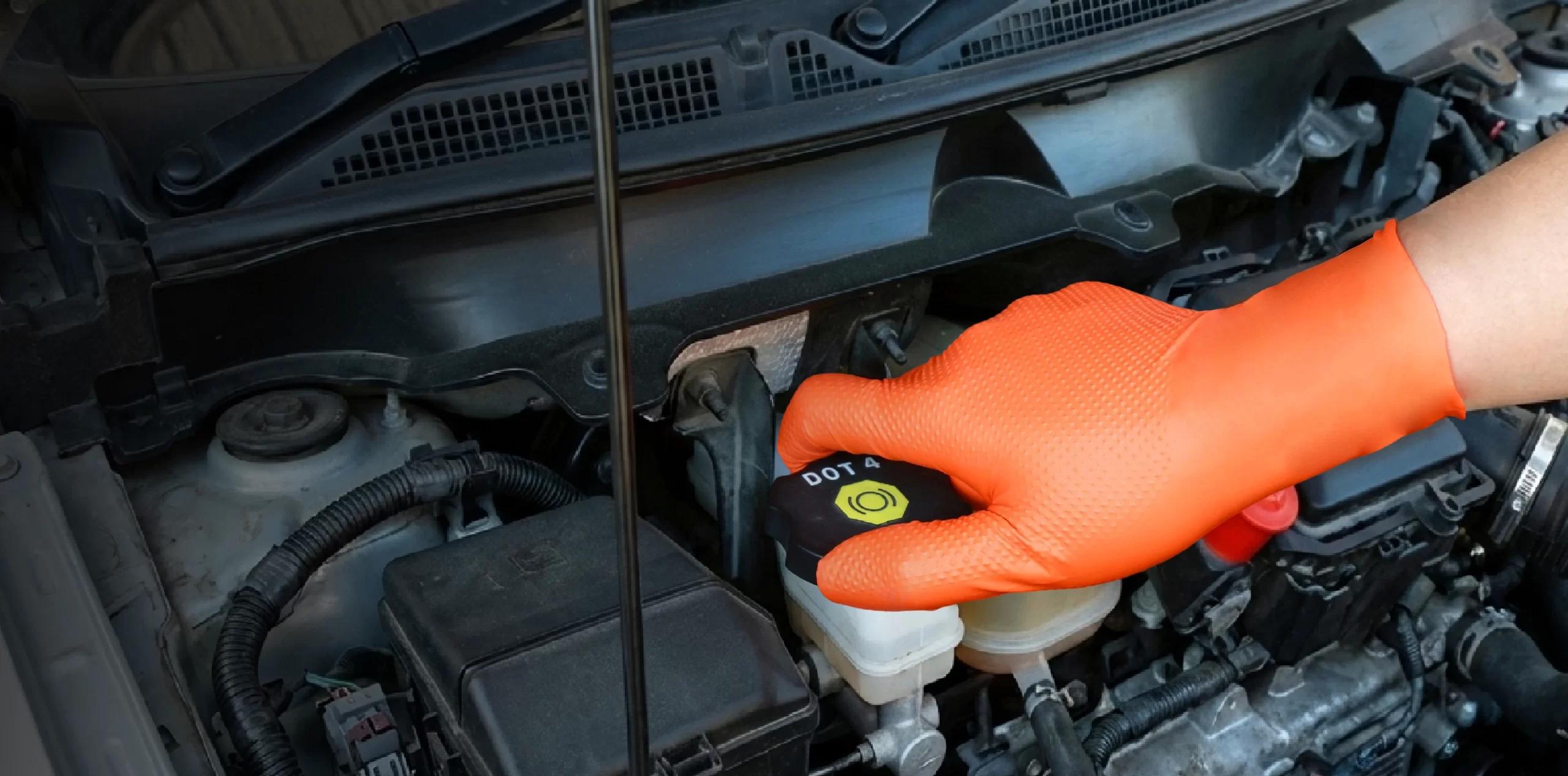
Industrial Gloves Designed for Automotive and Mechanical Work
Diamond Textured Nitrile Gloves for High-Grip Operations
For workshops where oil, grease, and lubricants are unavoidable, INTCO’s Diamond Textured Nitrile Gloves are frequently selected as automotive disposable gloves. The raised diamond texture is designed to maintain grip even after prolonged exposure to oil films, reducing tool slippage during assembly and disassembly work.
These gloves are commonly used in automotive repair bays, equipment maintenance stations, and metal fabrication environments where grip reliability directly affects task efficiency. Rather than increasing glove thickness to compensate for grip loss, INTCO optimised surface texture depth to balance dexterity with control.
ChemTuff™ Nitrile Gloves for Chemical and Solvent Exposure
In environments involving degreasers, cleaning agents, and industrial solvents, INTCO’s ChemTuff™ Disposable Nitrile Gloves are developed to provide extended chemical resistance without compromising hand mobility. During product validation, these gloves undergo repeated exposure cycles rather than single-contact testing, reflecting real maintenance workflows where solvents are used continuously throughout a shift.
For buyers comparing the best disposable gloves for industrial applications, this distinction often determines whether gloves survive a full workday or require frequent replacement.
Nitrile Gloves for Mechanics: Precision Without Compromise
In mechanical maintenance and repair, gloves must protect without interfering with precision tasks. INTCO’s nitrile gloves for mechanics are designed based on feedback from technicians performing fastening, wiring, and inspection work.
Mechanic Nitrile Gloves with Reinforced Stress Zones
One recurring failure point identified during field trials was tearing at the thumb-index junction during repetitive torque motion. INTCO addressed this by reinforcing stress zones through mould geometry adjustments rather than increasing overall glove thickness. The result is a mechanical nitrile glove that maintains tactile sensitivity while reducing tear incidents during extended use.
For buyers evaluating the best disposable gloves for mechanics, this engineering-driven approach often matters more than generic strength claims.
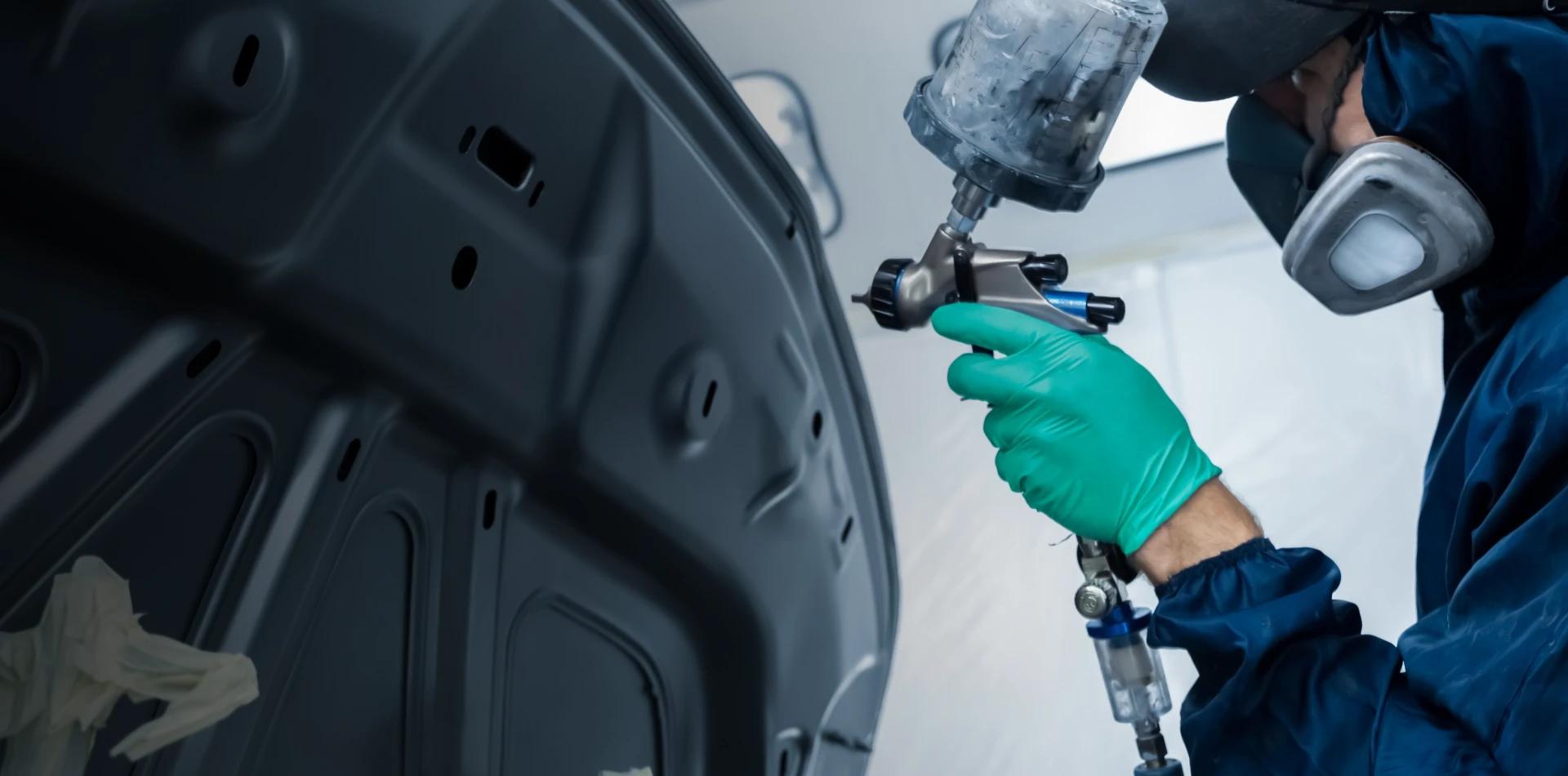
Extended Cuff Nitrile Gloves for Additional Protection
Certain industrial tasks require protection beyond the wrist. INTCO’s 12-inch extended cuff nitrile gloves are designed for chemical handling, equipment cleaning, and environments where splashes or drips are likely. The extended cuff reduces skin exposure while maintaining the same grip and flexibility characteristics as standard-length gloves.
These gloves are commonly selected in maintenance workshops, industrial cleaning operations, and chemical processing support roles where forearm exposure presents a risk.
How INTCO Supports Industrial Buyers Beyond the Product Itself
When industrial buyers conduct industrial safety glove suppliers, product performance is only one dimension. Supply consistency, documentation accuracy, and audit readiness are equally critical. During factory audits, INTCO typically guides customers through raw material preparation, automated dipping lines, curing processes, and post-production inspection stages. Lot traceability and defect control procedures are demonstrated in real time.
Certification as a Continuous Manufacturing Process
INTCO industrial gloves are developed in alignment with international standards such as ISO 21420 for general glove requirements and EN 388 for mechanical risk resistance. Chemical protection performance aligns with relevant sections of ISO 374, while material compliance for hygiene-sensitive environments references FDA glove regulations.
Rather than treating certification as static labels, INTCO maintains ongoing batch testing, periodic third-party validation, and documentation updates as part of routine production management.
Building Trust Through Transparency and Risk Disclosure
INTCO does not avoid discussing operational risks. Lead times, quality deviation handling, and corrective action processes are clearly defined with customers. When defects occur, root cause analysis is conducted, corrective measures are implemented, and follow-up verification is shared. This approach reduces uncertainty and builds trust across long-term industrial supply relationships.
The broader manufacturing ecosystem of INTCO Medical supports material research across medical consumables, rehabilitation products, and physical therapy categories, while industrial glove development remains firmly grounded in industrial performance requirements.
Industrial Protection Gloves as a Risk Control Tool
Ultimately, Industrial Protection Gloves function as part of a broader risk management system. When gloves perform consistently, workers remain focused, production stays on schedule, and audits proceed smoothly. When gloves fail, the costs multiply quickly. By designing gloves around real industrial conditions, verified standards, and transparent manufacturing processes, INTCO positions its industrial gloves as reliable operational tools rather than disposable commodities.
FAQ
What makes industrial protection gloves different from medical gloves?
Industrial gloves are designed for mechanical stress, oil exposure, and abrasion, while medical gloves prioritise barrier protection and sterility.
Are nitrile gloves suitable for heavy mechanical work?
Yes, properly engineered nitrile gloves offer strong chemical resistance and durability for mechanical tasks when designed specifically for industrial use.
How should buyers compare industrial glove suppliers?
Beyond price, buyers should evaluate certification maintenance, production consistency, audit transparency, and supply reliability.
Do industrial gloves require international certification?
Most industrial markets require compliance with standards such as EN 388, ISO 21420, or ISO 374 depending on application risks.
Can disposable gloves still offer industrial-grade protection?
Yes, disposable industrial gloves can provide effective protection when material formulation and thickness are matched to task demands.