
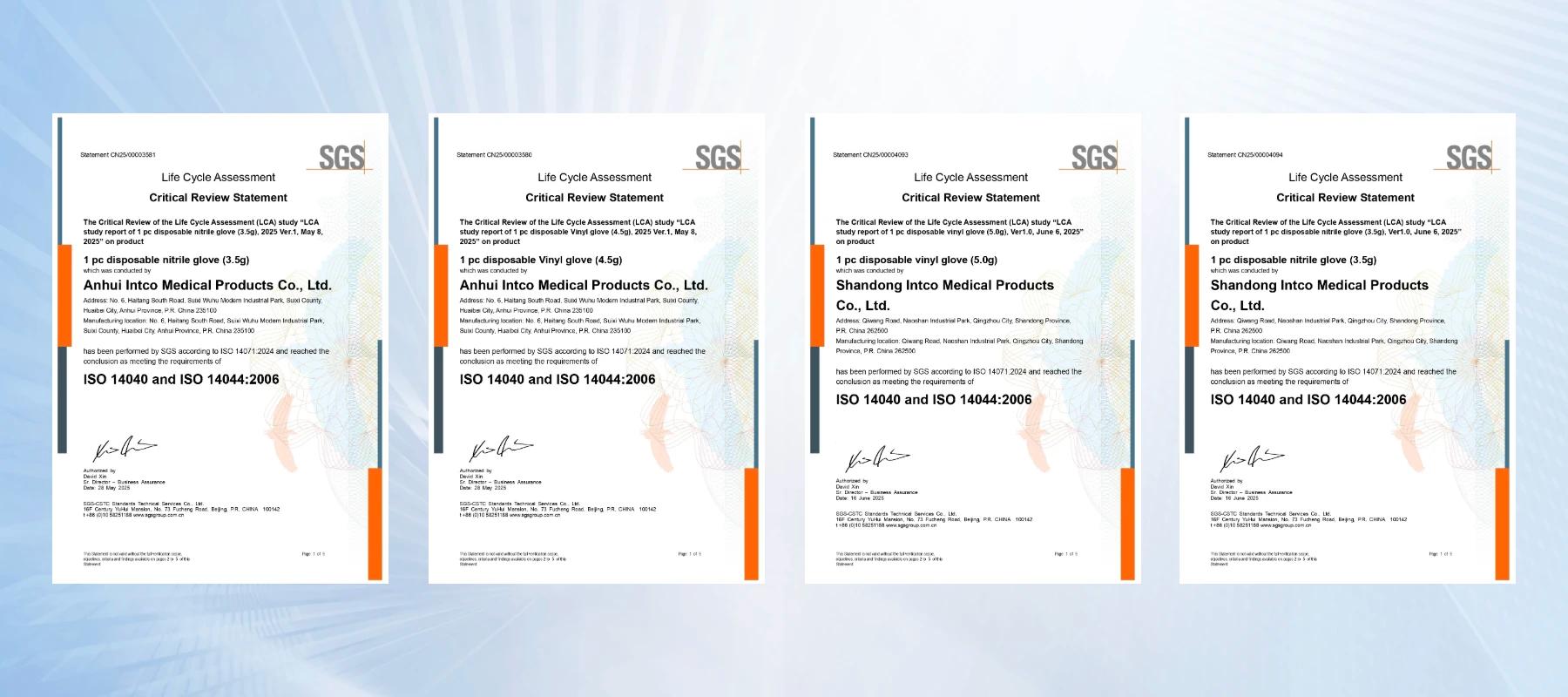
INTCO Medical Earns LCA, Carbon Footprint Certifications
What Is a Life Cycle Assessment (LCA)?
Who Benefits from LCA?
• Product Management & R&D: LCA helps ensure compliance with evolving environmental regulations—critical for industries like healthcare, where public tenders often require transparent impact data. It also guides innovation: By comparing materials (e.g., alternative plastics for medical devices), R&D teams can reduce emissions without sacrificing quality.
• Supply Chain & Procurement: Over 80% of a product’s environmental impact often lies in its supply chain. For INTCO, LCA sheds light on which suppliers minimise carbon footprints, turning procurement into a sustainability lever rather than just a cost-cutting exercise.
• Marketing & Sales: Today, 81% of consumers expect companies to drive environmental progress. INTCO’s LCA certification gives its marketing team credible data to communicate sustainability efforts, distinguishing its products in a market where transparency matters.
• Leadership: Executives use LCA insights to embed sustainability into long-term strategy. For INTCO, this could mean setting carbon reduction targets or aligning with global initiatives like net-zero goals.

The Product Life Cycle: From “Cradle to Grave”
• Cradle-to-grave: Covers all stages from raw materials to disposal—ideal for holistic impact checks.
• Cradle-to-gate: Focuses on production up to when the product leaves the factory, often used for Environmental Product Declarations (EPDs)—standardised certifications that INTCO’s achievement likely supports.
• Cradle-to-cradle: Emphasises recycling, turning waste into new resources—a fit for circular economy goals.