
Nitrile Gloves for Cleaning and Disinfecting: A Buyer’s Selection Guide
Cleaning and disinfecting are where disposable gloves earn their keep — and also where the wrong glove fails fastest. Bleach, quaternary ammonium disinfectants, and concentrated cleaners are exactly the kind of harsh chemicals that degrade a weak glove mid-task, leaving the very hands the glove was meant to protect exposed. For a facility buying cleaning consumables at volume — a hospital, food plant, lab, or salon — choosing the right cleaning nitrile gloves isn’t a detail; it’s a safety and compliance decision.
Nitrile is the default material for this work, and for good reason. But “nitrile” alone doesn’t guarantee performance against bleach or a deep-clean protocol — thickness, chemical rating, and formulation all matter. This guide explains why nitrile is the right material for cleaning and disinfecting, how to match the glove to the intensity of the task, and the handling mistakes that quietly undermine protection.
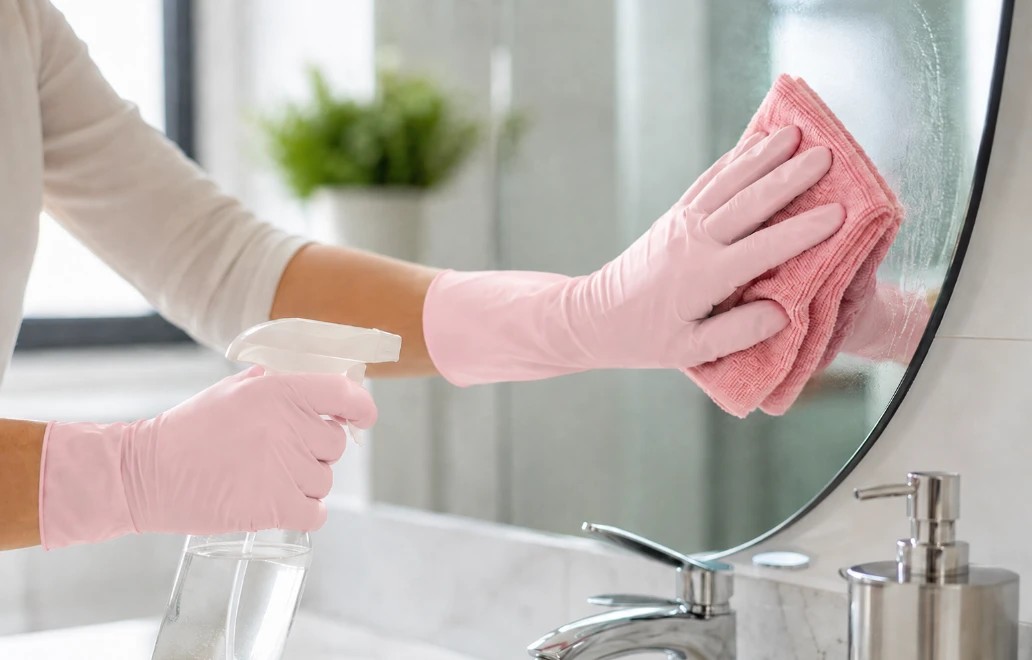
Why Nitrile Is the Right Material for Cleaning and Disinfecting
Three properties make nitrile the standard choice for cleaning work:
- Chemical resistance. Nitrile butadiene rubber (NBR) resists a far broader spectrum of cleaning chemicals — bleach, hydrogen peroxide, alcohols, quaternary ammonium compounds, and many solvents — than latex or vinyl at the same thickness. Latex degrades against many of these; vinyl offers the weakest barrier of the three.
- Puncture and tear strength. Cleaning is physical work — scrubbing, gripping, handling sharp debris in waste. Nitrile’s superior puncture resistance keeps the barrier intact where a thinner vinyl glove would tear.
- Latex-free safety. Cleaning crews in healthcare and food settings often rotate staff. A latex-free glove removes the Type I allergy risk entirely, simplifying compliance across a changing workforce.
The combination is why nitrile, not latex or vinyl, is the material that holds up to a disinfecting protocol. The next question is which nitrile glove — because the right answer changes with how aggressive the task is.
Matching the Glove to the Cleaning Task
Not every cleaning job needs the same glove. Buying one heavy-duty glove for everything overspends on light tasks; buying one thin glove for everything fails on the hard ones. The efficient approach is a tiered standard across three intensity levels.
Light & Routine Cleaning
For everyday wiping, surface sanitizing, and general housekeeping — the high-frequency, low-hazard tasks that make up most of a cleaning schedule — you want a comfortable, dexterous, latex-free glove that staff will actually keep on through repeated changes. Comfort and fit drive compliance here more than maximum thickness. A versatile option like nitrile gloves for daily cleaning is built for exactly this routine wiping and sanitizing work in institutional settings, balancing protection with all-shift wearability.
Disinfecting with Bleach & Harsh Chemicals
This is the tier where glove quality is non-negotiable. When the task involves bleach, concentrated disinfectants, or chemical splash risk, the glove must meet a defined chemical-splash standard — a general-purpose glove is not enough. For these jobs, specify a chemical-resistant nitrile glove rated for harsh-substance handling: INTCO’s ChemTuff is engineered for heavy-duty splash protection against the exact chemicals — bleach, concentrated disinfectants — that defeat ordinary gloves. Matching the glove’s chemical rating to the disinfectant in use is the single most important step in this tier.
Deep Cleaning & High-Risk Sanitation
Deep-clean protocols — biohazard cleanup, terminal cleaning, heavy degreasing, high-risk sanitation — combine aggressive chemicals with mechanical stress and longer wear times. Here the priority shifts to thickness and durability: a thicker, highly durable glove that won’t tear partway through a rigorous task. A heavy-duty nitrile glove for deep cleaning like INTCO’s Synguard H+ delivers the extra thickness and tear resistance procurement managers need when a barrier failure during high-risk sanitation isn’t an acceptable risk.
A Quick Selection Reference
| Cleaning Task | Priority | Glove Tier |
|---|---|---|
| Routine wiping, surface sanitizing, housekeeping | Comfort, fit, all-shift wear | Standard daily-cleaning nitrile |
| Bleach, concentrated disinfectants, splash risk | Certified chemical resistance | Chemical-resistant nitrile |
| Biohazard, terminal clean, heavy degreasing | Thickness, tear resistance | Heavy-duty nitrile |
Best Practices: Mistakes That Undermine Protection
Even the right glove fails if it’s used wrong. These are the handling errors that most often occur in cleaning operations — worth incorporating into staff training and procurement guidance.
Don’t reuse single-use gloves. Disposable nitrile is designed for single use. After exposure to bleach or disinfectant, the film’s barrier integrity degrades — washing and reusing a single-use glove is false economy that risks a hidden breach. Budget gloves as a consumable, not a reusable.
Don’t assume one glove fits all chemicals. Chemical resistance is specific, not universal. A glove rated for bleach may not be rated for a particular solvent. Check the chemical-resistance data against the actual products your crews use, and tier your gloves accordingly.
Watch exposure time, not just contact. Chemical resistance is a function of concentration and time. A glove that handles a brief bleach splash fine may break down under prolonged immersion. For extended wet-contact tasks, step up to a thicker, higher-rated glove.
Hand sanitizer on gloves is not a substitute for changing them. A common myth: spraying sanitiser on gloved hands to “extend” a pair. Alcohol-based sanitizers can degrade the glove material and don’t reliably decontaminate it. The correct practice is to remove, discard, and don a fresh pair — not to sanitize and continue.
Don the right size. A glove that’s too loose snags and tears; one that’s too tight fatigues the hand and splits at stress points. Stocking a proper size range is a small procurement step that materially reduces failure rates.
What Procurement Should Specify
For a buyer standardizing cleaning gloves across a facility, four specifications turn this into a defensible standard:
- Material: Latex-free nitrile, to cover allergy compliance and chemical resistance in one decision.
- Chemical rating: Documented resistance data covering bleach and your specific disinfectants — required for the disinfecting tier.
- Thickness tiers: A light/routine option and a heavy-duty option, so crews aren’t over- or under-gloved per task.
- Single supplier, consistent quality: Sourcing the full tiered range from one manufacturer simplifies qualification and guarantees consistent quality and documentation. As a large-scale manufacturer, INTCO Medical produces the complete cleaning range — daily, chemical-resistant, and heavy-duty nitrile — in-house, so a facility can standardize all three tiers, with matching certification, through one qualified supplier.
Frequently Asked Questions
Are nitrile gloves safe to use with bleach?
Yes, when you use a glove rated for it. Nitrile resists bleach far better than latex or vinyl, but resistance depends on concentration and exposure time. For regular bleach or concentrated-disinfectant work, specify a chemical-resistant nitrile glove rather than a general-purpose one.
Can you reuse nitrile cleaning gloves?
No — disposable nitrile is single-use. After exposure to cleaning chemicals the barrier degrades, so washing and reusing them risks an unseen breach. Treat them as a consumable.
Can I spray hand sanitiser on my gloves instead of changing them?
No. Alcohol-based sanitizer can degrade the glove and won’t reliably decontaminate it. Remove, discard, and put on a fresh pair instead.
What thickness do I need for deep cleaning?
Thicker than routine work. Deep-clean and high-risk sanitation tasks call for heavy-duty nitrile that resists tearing under mechanical stress and prolonged chemical contact — choose a higher-mil, durability-focused glove for those protocols.
Which is better for cleaning — nitrile or vinyl gloves?
Nitrile, for anything involving harsh chemicals or physical scrubbing. Vinyl is cheaper but offers a weaker barrier and far less chemical resistance, making it suitable only for the lightest, lowest-risk cleaning.
The Bottom Line for Buyers
Nitrile is the right material for cleaning and disinfecting — latex-free, chemically resistant, and tough enough for physical work. But the protection only holds if you match the glove to the task: a comfortable daily glove for routine sanitising, a certified chemical-resistant glove for bleach and disinfectants, and a heavy-duty glove for deep-clean protocols. Pair the right tier with sound handling practices, and you eliminate the most common cause of glove failure on a cleaning crew.
INTCO Medical manufactures the full cleaning range in-house, with chemical-resistance documentation provided at the RFQ stage. If you’re standardizing gloves for a cleaning or disinfection program, the fastest path is a direct manufacturer consultation across the daily, chemical-resistant, and heavy-duty tiers.
Building a cleaning glove standard for your facility? Request samples and a quote from INTCO Medical and match the right nitrile tier to each task in your protocol.
