
Vinyl vs Nitrile Gloves: Which Is Better for Industrial Protection?
Vinyl and nitrile gloves serve different purposes in industrial protection. Vinyl gloves are typically suitable for low-risk, short-duration tasks, while nitrile gloves are preferred for environments requiring higher durability, chemical resistance, and consistent performance.
Choosing the right glove depends on factors such as chemical exposure, task frequency, and compliance requirements. This guide explains the key differences and helps industrial buyers determine which option is more suitable for their specific applications.
Understanding the Material Difference Behind Vinyl and Nitrile Gloves
Vinyl gloves are made from polyvinyl chloride (PVC) combined with plasticisers to create flexibility. This structure allows for easy donning and cost-effective large-scale use, particularly in low-risk industrial tasks such as light assembly, surface cleaning, or short-duration handling where chemical exposure is minimal. However, PVC’s molecular structure limits elasticity and tensile strength, which becomes noticeable during extended wear or when handling sharp-edged components.
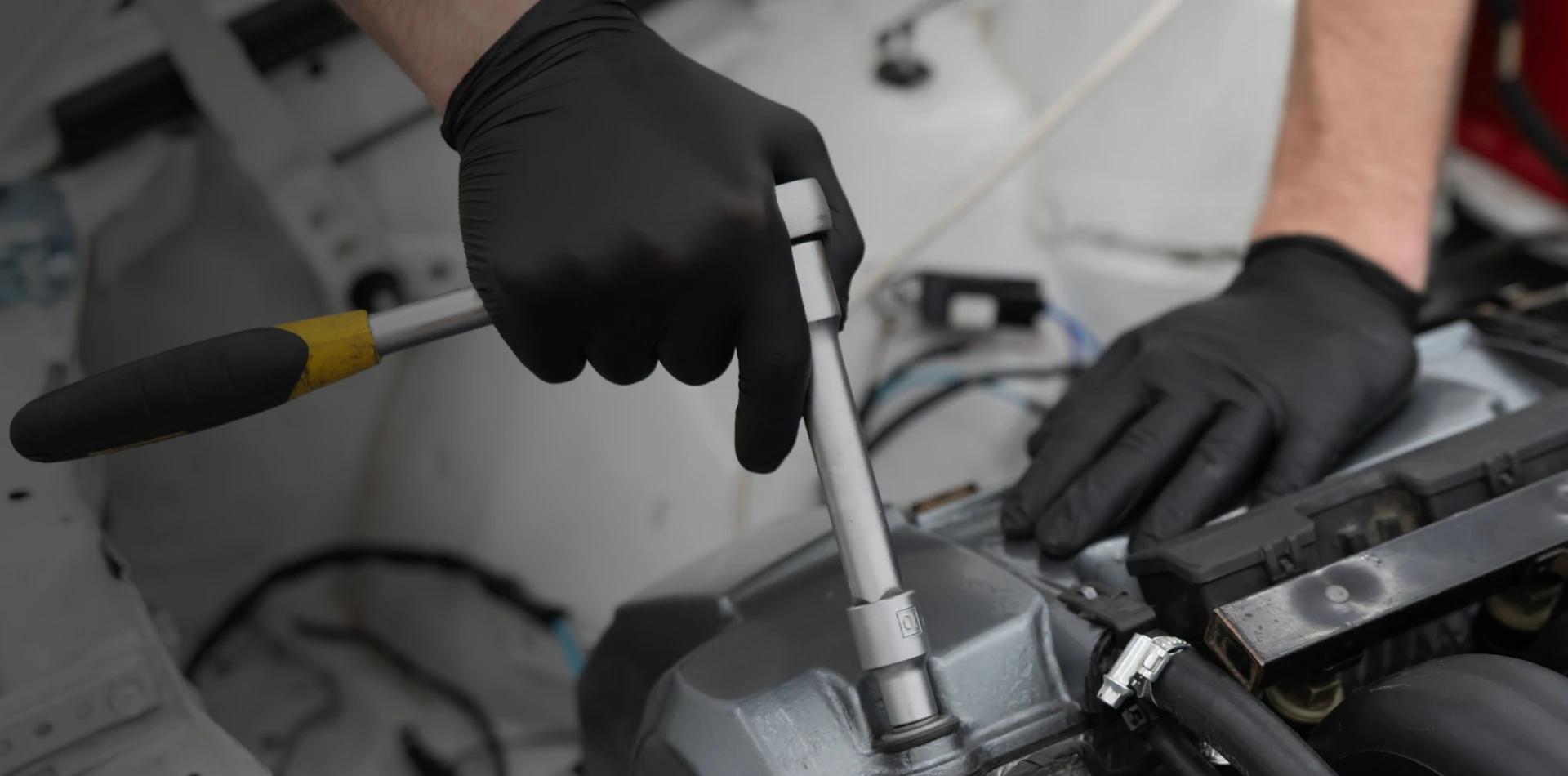
Nitrile gloves, by contrast, are produced from synthetic nitrile butadiene rubber. Their cross-linked polymer chains provide higher puncture resistance and elasticity, enabling gloves to stretch and recover without tearing. In practical factory environments, this difference becomes clear during repetitive gripping, tool handling, and prolonged shifts, where glove fatigue often causes micro-tears. Buyers evaluating PVC vs. nitrile gloves usually underestimate how these micro-failures increase the risk of contamination and injury over time. In practical terms, these material differences mean vinyl gloves are better suited for basic tasks, while nitrile gloves provide more reliable protection in demanding industrial environments.
Chemical Resistance in Industrial Settings: What Really Matters
Chemical resistance is one of the most cited reasons for choosing nitrile over vinyl, but the nuance is often lost in simplified comparisons. Vinyl gloves offer limited protection against mild acids, bases, and alcohols, yet they are not designed for sustained contact with solvents, oils, or aggressive chemicals. In environments such as metal processing, automotive maintenance, or industrial cleaning, vinyl gloves can soften or degrade, increasing permeation risk.
Nitrile gloves are widely recognised for superior resistance to oils, fuels, hydraulic fluids, and many industrial solvents. Discussions around vinyl vs nitrile gloves’ chemical resistance frequently highlight this gap, but what matters operationally is predictability. Nitrile maintains barrier integrity across longer exposure times, which is why it is commonly specified alongside guidance comparing nitrile vs latex gloves’ chemical resistance in safety assessments. While latex offers good elasticity, its vulnerability to certain chemicals and allergy risks makes nitrile the more stable choice for industrial compliance. For industrial environments involving chemicals or prolonged exposure, nitrile gloves are generally the safer and more reliable choice.
Comparing Nitrile, Latex, and Vinyl in Mixed-Use Facilities
Many industrial facilities operate mixed-use zones where maintenance, packaging, and inspection occur side by side. In these settings, procurement teams often ask whether one glove type can cover all scenarios. Comparisons involving latex nitrile gloves’ chemical resistance typically conclude that nitrile offers the most balanced performance across chemical handling, mechanical stress, and hygiene requirements. Vinyl may still play a role in low-risk tasks, but relying on it for universal protection often leads to inconsistent outcomes.
At INTCO production sites, glove trials are conducted by assigning different glove materials to identical task lines. Supervisors monitor tear rates, change frequency, and worker feedback over full shifts. These trials consistently show that while vinyl gloves reduce upfront cost, nitrile gloves reduce glove change frequency and unplanned downtime caused by failures.
How Industrial Buyers Evaluate Gloves Beyond the Datasheet
Experienced buyers do not rely solely on technical specifications. During factory audits, clients often observe how gloves are produced, tested, and packed. At INTCO Medical, visitors are guided through compounding, dipping, curing, and post-processing stages to see how consistency is controlled. Quality inspections focus on thickness uniformity, tensile strength sampling, and chemical resistance testing aligned with recognised standards such as ASTM International and ISO.
One common point of discussion during audits is batch stability. Industrial customers want assurance that the gloves they approve today will perform the same six months later. This is where nitrile’s material stability offers an advantage over vinyl, which is more sensitive to formulation changes and plasticiser migration during storage.
Compliance, Certification, and Real-World Application
Compliance is a critical factor when selecting industrial gloves, particularly in regulated environments such as food processing, healthcare, and chemical handling. Guidance from organisations such as OSHA emphasises hazard-based PPE selection rather than price-driven decisions. In facilities that also handle medical consumables, nitrile gloves are frequently chosen to align with broader compliance frameworks overseen by bodies like the U.S. FDA.
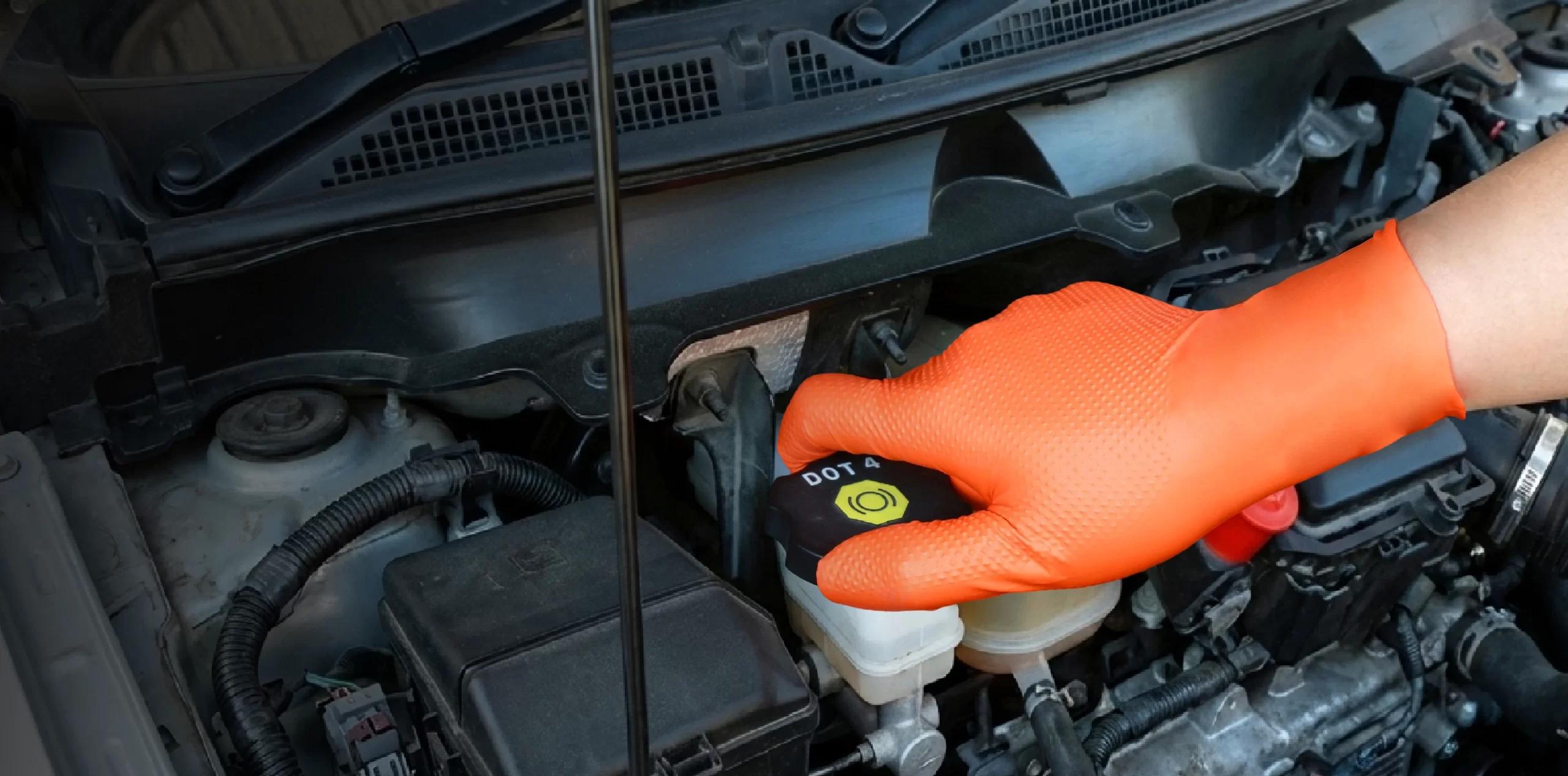
INTCO’s industrial glove development process integrates these compliance considerations early. When a customer requests a glove suitable for both mechanical assembly and controlled clean zones, engineers evaluate material compatibility, surface treatment, and packaging methods. This consultative approach reflects how industrial buyers actually operate—balancing safety, certification, and logistics rather than treating gloves as interchangeable commodities. In regulated environments, nitrile gloves are more commonly selected due to their broader compliance compatibility and higher performance reliability.
Authority Built Through Industry Exposure and Third-Party Validation
Authority in industrial PPE does not come from self-declared expertise but from sustained presence in regulated markets. INTCO’s gloves undergo third-party testing and are supplied to clients who routinely audit production lines and documentation. Participation in global trade exhibitions and ongoing collaboration with distributors reinforces accountability, as any deviation in quality quickly becomes visible in competitive markets.
Industry references and technical guidance from institutions like the National Institute for Occupational Safety and Health further shape glove selection criteria, particularly in high-risk environments. Aligning product development with these external benchmarks strengthens trust beyond marketing claims.
Managing Risk, Delivery, and After-Sales Responsibility
Trust is built when suppliers openly address operational risks. Lead times for industrial gloves depend on material availability, order volume, and customisation requirements. INTCO communicates delivery schedules based on production capacity rather than optimistic estimates, allowing buyers to plan inventory accurately. In the event of quality deviations, traceability systems link finished goods back to raw material batches, enabling targeted investigation instead of blanket recalls.
After-sales support extends beyond replacement. When clients report unexpected glove failures, samples are analysed to determine whether task mismatch, chemical exposure, or improper storage caused the issue. This feedback loop informs future recommendations, reinforcing the role of the supplier as a technical partner rather than a transactional vendor.
Choosing Between Vinyl and Nitrile with Confidence
The decision between vinyl and nitrile gloves should be grounded in task analysis, exposure risk, and lifecycle cost. Vinyl gloves remain suitable for low-risk, short-duration tasks where frequent changes are acceptable. Nitrile gloves are better suited for environments requiring consistent chemical resistance, mechanical durability, and compliance across diverse applications. Understanding these differences allows industrial buyers to align protection strategies with operational realities rather than assumptions.
For organisations seeking deeper consultation on glove selection, production capability, or compliance alignment, detailed corporate and operational information is available through INTCO’s global manufacturing network, with direct communication channels accessible via the contact page. Broader product insights can be explored across the INTCO glove portfolio, reflecting the integration of industrial, medical, and professional protection solutions.
When Should You Choose Nitrile Over Vinyl?
Choosing between vinyl and nitrile gloves depends on the level of protection required, task conditions, and compliance expectations. While vinyl gloves are suitable for basic, low-risk applications, nitrile gloves are the preferred choice in more demanding industrial environments.
You should choose nitrile gloves when:
1. The task involves chemical exposure Nitrile gloves provide better resistance to a wide range of chemicals, oils, and solvents. In industrial environments where contact with substances is frequent or prolonged, nitrile gloves offer more reliable protection.
2. Tasks are high-frequency or repetitive In workflows that require constant glove use, such as assembly lines or maintenance operations, nitrile gloves perform better due to their durability and lower failure rates. This helps reduce interruptions and improve overall efficiency.
3. Durability and puncture resistance are critical Nitrile gloves are more resistant to tearing and punctures compared to vinyl gloves, making them suitable for handling tools, equipment, or sharp-edged components.
4. A better fit and dexterity are required Nitrile gloves offer improved elasticity and a closer fit, which enhances control and precision. This is particularly important for tasks requiring detailed handling or accuracy.
5. Compliance and safety standards must be met In regulated environments such as healthcare, food processing, or industrial manufacturing, nitrile gloves are often preferred due to their broader compliance compatibility and consistent performance.
6. Long-term cost efficiency matters Although nitrile gloves may have a higher unit price, their durability and reduced replacement frequency often result in lower overall cost-per-use in high-consumption scenarios.
In summary, nitrile gloves are the better choice when performance, durability, and safety are priorities, while vinyl gloves remain suitable for low-risk, short-duration tasks where cost is the primary concern.
FAQ
Are vinyl gloves suitable for chemical handling in industrial environments?
Vinyl gloves provide limited chemical resistance and are generally suitable only for brief contact with mild substances. For environments involving stronger chemicals or prolonged exposure, nitrile gloves are the safer choice.
Why are nitrile gloves preferred over latex in many factories?
Nitrile gloves offer better chemical resistance, durability, and eliminate the risk of latex allergies, making them more suitable for industrial and regulated environments.
Do nitrile gloves justify their higher cost?
Yes, in many cases. Although nitrile gloves have a higher unit price, their durability and lower failure rates often reduce overall cost by minimizing replacements and downtime.
Can one glove type cover all industrial tasks?
No. Different tasks require different levels of protection. However, nitrile gloves are often used as a general-purpose solution because they perform well across a wide range of industrial applications.
How do industrial buyers choose between vinyl and nitrile gloves?
Industrial buyers typically evaluate glove selection based on chemical exposure, task frequency, durability requirements, and compliance standards. Nitrile gloves are preferred when higher protection and consistency are required.