PE Disposable Gloves: LDPE, HDPE, CPE & TPE Buyer's Guide
PE disposable gloves are commonly used in food processing, catering, restaurants, housekeeping, and other operations that require convenient, single-use hand protection. For businesses purchasing gloves in bulk, choosing the right material is important for balancing product specifications, handling comfort, operational needs, and purchasing costs.
But what is the difference between LDPE, HDPE, CPE, and TPE gloves?
Although these four types are often grouped under PE disposable gloves, their material characteristics, textures, and fit can differ significantly.
INTCO Medical offers LDPE, HDPE, CPE, and TPE disposable gloves for commercial applications. This guide compares their main characteristics and explains how distributors, wholesalers, importers, and procurement teams can select suitable gloves for their businesses.
What Are PE Disposable Gloves?
PE disposable gloves are lightweight, single-use gloves commonly used for food handling and other routine activities requiring frequent glove changes.
Traditional PE gloves are manufactured from polyethylene materials, including low-density polyethylene (LDPE) and high-density polyethylene (HDPE). Cast polyethylene (CPE) gloves are another polyethylene-based option.
TPE gloves are manufactured from thermoplastic elastomer materials. Although TPE is not the same material as conventional polyethylene, it is often included in commercial PE glove product ranges because of its related applications.
INTCO Medical supplies four major options:
- LDPE Gloves: Soft, flexible polyethylene gloves for routine disposable use.
- HDPE Gloves: Lightweight, economical gloves for high-volume applications.
- CPE Gloves: Cast polyethylene gloves featuring a distinctive embossed surface.
- TPE Gloves: Thermoplastic elastomer gloves designed with enhanced elasticity and soft-touch comfort.
Explore the INTCO PE Gloves product range.

LDPE vs HDPE vs CPE vs TPE Gloves: Key Differences
The four glove materials have different characteristics that can influence purchasing decisions.
| Feature | LDPE Gloves | HDPE Gloves | CPE Gloves | TPE Gloves |
|---|---|---|---|---|
| Full material name | Low Density Polyethylene | High Density Polyethylene | Cast Polyethylene | Thermoplastic Elastomer |
| Main characteristic | Softness and flexibility | Lightweight and economical | Embossed texture and durability-focused design | Enhanced elasticity and softness |
| Available surface options | Smooth or embossed | Smooth or embossed | Rhombus embossed | Frosted or hollow-square texture |
| Fit characteristics | Flexible, generally loose fit | Lightweight, generally loose fit | Convenient wearing and removal | More elastic and flexible fit |
| Common applications | Food handling, housekeeping, beauty services | Food service, retail, general handling | Food processing, housekeeping, pet care | Food handling, beauty services, general housekeeping |
| Purchasing priority | Flexibility and convenience | Cost efficiency for frequent changes | Texture and handling requirements | Elasticity and wearing comfort |
Note: The comparison summarizes INTCO product characteristics rather than standardized head-to-head performance test results. Actual performance depends on product specifications, thickness, weight, texture, and usage conditions.
Video: LDPE vs HDPE vs CPE vs TPE Gloves
Understanding the Four Types of PE-Series Gloves
LDPE Gloves: Soft and Flexible for Everyday Handling
LDPE stands for Low Density Polyethylene.
INTCO Disposable LDPE Gloves provide a lightweight, flexible option for applications involving regular glove replacement.
Key features include:
- Soft and flexible material
- Lightweight construction
- Smooth and embossed texture options
- Convenient wearing and removal
- Options for food handling, housekeeping, beauty services, and pet care
LDPE gloves are worth considering when flexibility and convenience are important, particularly for routine tasks requiring frequent glove changes.
HDPE Gloves: Lightweight and Cost-Efficient for Bulk Use
HDPE stands for High Density Polyethylene.
INTCO Disposable HDPE Gloves are designed for economical disposable use in high-volume environments.
Key features include:
- Lightweight polyethylene material
- Cost-efficient options for frequent replacement
- Smooth and embossed texture options
- Convenient handling in fast-paced operations
- Applications in food service, retail, hospitality, and general handling
For businesses purchasing large quantities of disposable gloves, HDPE can be a practical option when lightweight construction and cost management are major priorities.
However, HDPE should not automatically be described as more puncture-resistant or durable than LDPE. Such comparisons require testing of the specific glove products.
CPE Gloves: Embossed Texture for Food Handling and Routine Tasks
CPE stands for Cast Polyethylene.
INTCO Disposable CPE Gloves feature a rhombus-embossed surface and a durability-focused product design.
Key features include:
- Cast polyethylene material
- Distinctive rhombus-embossed texture
- Lightweight design
- Convenient wearing and removal
- Applications in food processing, housekeeping, beauty services, and pet care
The embossed texture gives buyers another option when evaluating glove surface characteristics and handling preferences.
CPE gloves can be considered for food processing and other applications requiring frequent glove changes.
TPE Gloves: Enhanced Elasticity and Wearing Comfort
TPE stands for Thermoplastic Elastomer.
INTCO Disposable TPE Gloves are designed to provide a soft feel, enhanced elasticity, and flexible fit.
Key features include:
- Enhanced elasticity and flexibility
- Soft-touch material
- Comfortable, flexible fit
- Frosted and hollow-square texture options
- Available size options extending to XXL
- Applications in food handling, beauty services, housekeeping, and pet care
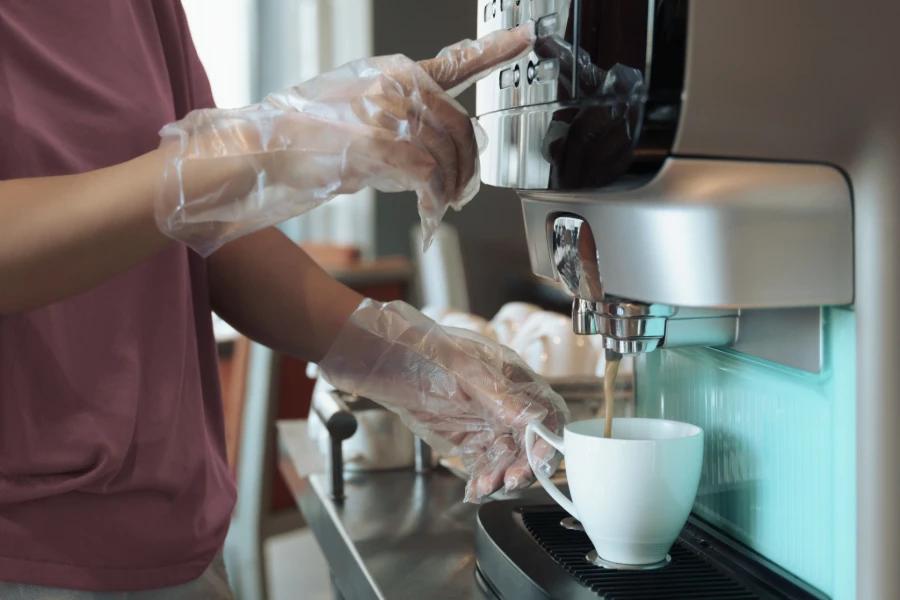
For buyers prioritizing elasticity and wearing comfort, TPE gloves are worth evaluating.
However, TPE gloves should not be treated as a universal replacement for nitrile examination gloves or gloves intended for hazardous chemical handling. Suitability depends on the specific product and application.
Which PE Disposable Gloves Are Best for Food Handling?
Food handling is one of the most common applications for PE-series disposable gloves.
Restaurants, food processors, catering companies, and other food-service businesses often need gloves that support convenient changes during routine operations.
The right choice depends on the task, material preferences, purchasing requirements, and applicable food-contact documentation.
LDPE and HDPE for Frequent Glove Changes
LDPE and HDPE gloves are commonly considered for operations requiring lightweight disposable hand coverage.
HDPE is positioned as an economical option for large-volume use, while LDPE emphasizes material flexibility.
Typical applications include food preparation, buffet service, catering, and general food handling.
CPE for Textured Glove Options
CPE gloves feature a rhombus-embossed surface.
Buyers may consider CPE when comparing textured disposable gloves for food processing, catering, and other routine food-handling activities.
Specific grip performance should be evaluated using product samples or relevant test information rather than inferred from texture alone.
TPE for Elasticity and Comfort
TPE gloves emphasize flexibility and soft-touch comfort.
They may be suitable for food-handling operations in which employees prefer a more elastic glove material.
Buyers should compare samples and specifications before selecting a material for large-scale purchasing.
Food-Contact Compliance Considerations
For food-contact applications, purchasing teams should confirm that the selected glove has appropriate supporting documentation.
INTCO maintains testing documentation for applicable PE-series products against requirements associated with:
- United States: FDA 21 CFR 177.1520
- European Union: Regulation (EC) No 1935/2004 and Regulation (EU) No 10/2011, including applicable amendments
- Germany: Relevant LFGB food-contact requirements
Documentation should be checked against the relevant product, tested configuration, intended contact conditions, and destination market.
Testing against FDA food-contact requirements should not be confused with FDA product approval or certification.
For additional product options, visit INTCO's PE Gloves category.
Other Common Applications of PE Disposable Gloves
Hospitality and Housekeeping
LDPE, HDPE, CPE, and TPE gloves offer options for routine housekeeping and general handling tasks.
When cleaning chemicals are involved, buyers should separately verify chemical compatibility and the protection requirements of the task.
Beauty and Hairdressing
PE-series gloves may be used for appropriate routine beauty and hairdressing applications.
LDPE emphasizes flexibility, while TPE offers a softer and more elastic feel.
For tasks involving hair dyes or other chemical formulations, glove compatibility must be confirmed for the specific substances used.
Retail and General Handling
HDPE and LDPE gloves can be considered for lightweight, short-duration handling activities in retail and other high-volume operations.
Material selection should be based on the expected task and any applicable hygiene or workplace safety requirements.
PE Disposable Gloves Wholesale: What Should Bulk Buyers Consider?
For glove distributors, importers, wholesalers, and private-label brands, selecting the right PE glove supplier involves more than comparing material names.
A useful sourcing process should cover product specifications, intended applications, customization, and supporting documentation.
1. Confirm the Glove Material and Specifications
Buyers should identify the required glove type and confirm:
- Material composition
- Size range and palm dimensions
- Weight and thickness
- Surface texture
- Fit and flexibility
- Available colors
- Packaging configuration
Product specifications can vary between designs and manufacturing configurations. The relevant technical data sheet should be used for confirmation.
2. Match the Glove to the Intended Application
Different operations may prioritize different characteristics.
For example:
- High-frequency food handling: Evaluate LDPE and HDPE options for convenient replacement and purchasing efficiency.
- Textured disposable gloves: Consider CPE options with rhombus embossing.
- Elasticity and flexible fit: Evaluate TPE gloves.
- General disposable use: Compare product specifications and samples against the actual task.
The appropriate choice should be verified against use conditions rather than material names alone.
3. Request Applicable Compliance Documentation
For food-contact markets, buyers should confirm the documents relevant to their product configuration and destination country.
Documentation may differ by glove material, color, manufacturing location, and tested sample.
Procurement teams should request the appropriate records and confirm their applicability before ordering.
4. Discuss OEM and Private-Label Requirements
INTCO Medical supports OEM/ODM solutions for applicable PE-series glove products.
Depending on technical feasibility and product requirements, customization may cover:
- Glove colors and sizes
- Weight and thickness
- Surface textures
- Packaging and private-label presentation
- Labels and carton markings
- Other agreed product specifications
Samples can be provided for testing and approval before mass production.
5. Compare Product Suitability, Not Just Unit Price
The lowest unit price does not necessarily represent the best option for every application.
Procurement teams should consider whether the glove meets operational requirements, supports practical glove-changing procedures, and provides the documentation required by customers.
Comparing product samples, technical specifications, and packaging formats can help buyers make more informed decisions.
Why Choose INTCO Medical as Your PE Glove Manufacturer and Supplier?
INTCO Medical provides disposable glove solutions for professional and commercial customers, including distributors, wholesalers, importers, and private-label businesses.
The INTCO PE-series product portfolio includes LDPE, HDPE, CPE, and TPE gloves, allowing buyers to evaluate different materials within one product range.
For business customers, INTCO offers:
- Multiple glove material options: LDPE, HDPE, CPE, and TPE
- Product selection support: Specifications and information for material evaluation
- OEM/ODM options: Customization according to product and manufacturing requirements
- Food-contact documentation: Applicable supporting records for relevant glove products
- B2B purchasing support: Consultation on material selection, packaging, and sourcing requirements
Explore INTCO's PE disposable gloves or contact our team to discuss your purchasing needs.
Frequently Asked Questions About PE Disposable Gloves
1. What is the difference between LDPE and HDPE gloves?
LDPE gloves emphasize softness and flexibility, while HDPE gloves focus on lightweight, economical disposable use.
Both may be suitable for routine applications involving frequent glove changes. Specific performance depends on the glove design and specifications.
2. What does CPE stand for in disposable gloves?
In INTCO's product range, CPE stands for Cast Polyethylene.
INTCO CPE gloves feature a rhombus-embossed texture and are available for applications including food handling, housekeeping, and general disposable use.
3. What is the difference between CPE and TPE gloves?
CPE gloves emphasize embossed texture and durability-focused design. TPE gloves emphasize enhanced elasticity, softness, and flexible fit.
Neither material should automatically be considered superior for every task. Buyers should evaluate the required specifications and use conditions.
4. Which PE gloves are suitable for food preparation?
LDPE, HDPE, CPE, and TPE glove options can be considered for food preparation, depending on the product and operation.
Buyers should select a glove with appropriate documentation for the intended food-contact conditions and destination market.
5. Are INTCO PE disposable gloves latex-free?
INTCO's LDPE, HDPE, CPE, and TPE glove materials are not made from natural rubber latex.
Customers with specific material restrictions should confirm the composition of the selected product.
6. Can PE gloves be used for cleaning chemicals?
PE-series gloves should not automatically be treated as chemical-resistant gloves.
For tasks involving cleaning chemicals, buyers should assess the substances, exposure conditions, and available protection data before selecting a glove.
7. Can INTCO provide OEM PE disposable gloves for wholesale buyers?
Yes. INTCO supports OEM/ODM customization for applicable PE-series products, including options for size, color, texture, weight, packaging, and private-label requirements, subject to technical confirmation.
8. What should I provide when requesting a bulk PE glove quotation?
Buyers should provide the intended application, preferred material, sizes, colour, texture, packaging requirements, estimated order quantity, and destination market.
Any food-contact documentation or other regulatory requirements should also be communicated.