





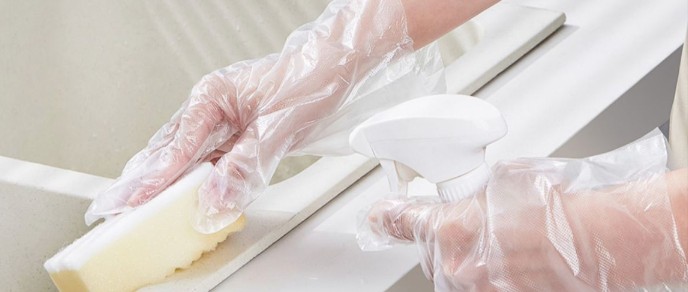
Our consistently high-quality gloves are guaranteed to provide safety for you, your skin, and your patients.














Latex vs. Nitrile vs. Vinyl Disposable Gloves: A Procurement Decision Guide
2026.06.04
Three materials dominate the disposable glove market — latex, nitrile, and vinyl — and for a procurement manager the choice is rarely about which is "best" in the abstract. It's about which one matches your risk profile, your compliance requirements, and your budget for a specific job. Buy nitrile where vinyl would do and you overspend; buy vinyl where nitrile is required and you fail an audit.
This guide compares latex gloves vs nitrile gloves vs vinyl the way a buyer needs to see them: material by material, on the properties that actually drive a sourcing decision — barrier strength, chemical resistance, allergy risk, fit, and cost — followed by a side-by-side table and clear recommendations by industry. The goal is to give you a defensible answer to "which glove should we standardize on, and where."
The Three Materials at a Glance
Before the trade-offs, a quick definition of each — because the differences start at the molecule.
Latex is made from natural rubber harvested from the rubber tree. It's the original disposable glove material, prized for elasticity, tactile sensitivity, and a second-skin fit. Its defining liability: natural rubber proteins that trigger Type I allergies in a meaningful share of users.
Nitrile is molded from nitrile butadiene rubber (NBR), a synthetic copolymer of acrylonitrile and butadiene. It's latex-free, far more puncture- and chemical-resistant than the other two, and has become the default in healthcare and industry. It's also the most expensive of the three.
Vinyl is made from PVC (polyvinyl chloride) plasticized into a flexible film. It's latex-free, the cheapest of the three, and well suited to short-duration, low-risk tasks — but it offers the weakest barrier and chemical resistance.
With that baseline, here's how they compare on the dimensions that matter.
Property-by-Property Comparison
Barrier Strength and Durability
This is where the gap is widest. Nitrile delivers roughly three to five times the puncture resistance of latex at equivalent thickness, and holds its barrier integrity far longer under stress — which is why it dominates in needle-rich and sharps-heavy settings. Latex is strong and elastic but more prone to puncture than nitrile. Vinyl is the weakest: its loose-fitting film can develop micro-tears and barrier breaks with movement, making it unsuitable for high-risk or prolonged tasks.
For any application where a barrier failure means exposure to blood, pathogens, or aggressive chemicals, nitrile is the defensible choice. INTCO's nitrile gloves catalog spans the puncture-resistant, chemical-resistant, latex-free options that this category demands.
Chemical Resistance
Nitrile resists the broadest spectrum of oils, fuels, solvents, and chemotherapy agents — it's the standard for chemo-rated handling and most industrial chemical work. Latex handles water-based substances and some acids well but degrades against oils and many solvents. Vinyl offers the least chemical protection and should be kept to non-hazardous, incidental-contact tasks.
Allergy and Skin Safety
This is latex's structural weakness. Natural rubber proteins cause Type I latex allergies, which can be serious — the reason healthcare systems moved off latex in the 2000s. Both nitrile and vinyl are latex-free and eliminate that risk entirely. (Note: a separate, milder issue — Type IV contact dermatitis from chemical accelerators — can affect some nitrile users, which is why accelerator-free nitrile exists for sensitive-skin environments.)
If your workforce or patient population includes anyone with latex sensitivity, latex-free is not optional — and that points to nitrile or vinyl.
Fit, Comfort, and Tactile Sensitivity
Latex still wins on pure feel — its elasticity gives a second-skin fit and excellent fine-motor sensitivity, which is why some surgical and precision applications historically favored it. Where latex allergy isn't a constraint, INTCO's latex gloves remain a strong choice for comfort-critical, water-based work. Nitrile has closed most of the gap with modern formulations and now offers excellent fit plus superior strength. Vinyl is the loosest-fitting and least tactile of the three.
Cost
The order is consistent: vinyl is cheapest, latex sits in the middle, nitrile is the most expensive — driven by NBR's volatile petrochemical inputs and energy-intensive production. But unit price is the wrong lens on its own. The right question is cost per task at the required protection level: paying for nitrile on a low-risk, short-duration job is overspend, while using vinyl on a high-risk task is a false economy that risks a failure. For genuinely low-risk, high-turnover settings like food prep, INTCO's vinyl gloves deliver the protection those tasks need at the lowest cost per glove.
Side-by-Side Comparison Table
Property | Latex | Nitrile | Vinyl |
|---|---|---|---|
Base material | Natural rubber | NBR (synthetic) | PVC (synthetic) |
Latex-free | No | Yes | Yes |
Puncture resistance | Good | Excellent | Poor |
Chemical resistance | Moderate | Excellent | Low |
Fit / tactile feel | Excellent | Very good | Basic |
Allergy risk | Type I (high) | Very low | Very low |
Relative cost | Medium | High | Low |
Best for | Comfort-critical, water-based tasks (no latex allergy) | Medical, lab, industrial, chemical | Short-duration, low-risk, food prep |
Which Glove for Which Industry?
Healthcare / dental / lab: Nitrile, medical exam grade. It's latex-free, delivers the strongest barrier, and meets certification requirements (e.g. ASTM D6319). Reserve latex only for specific comfort-critical procedures where latex allergy is fully controlled.
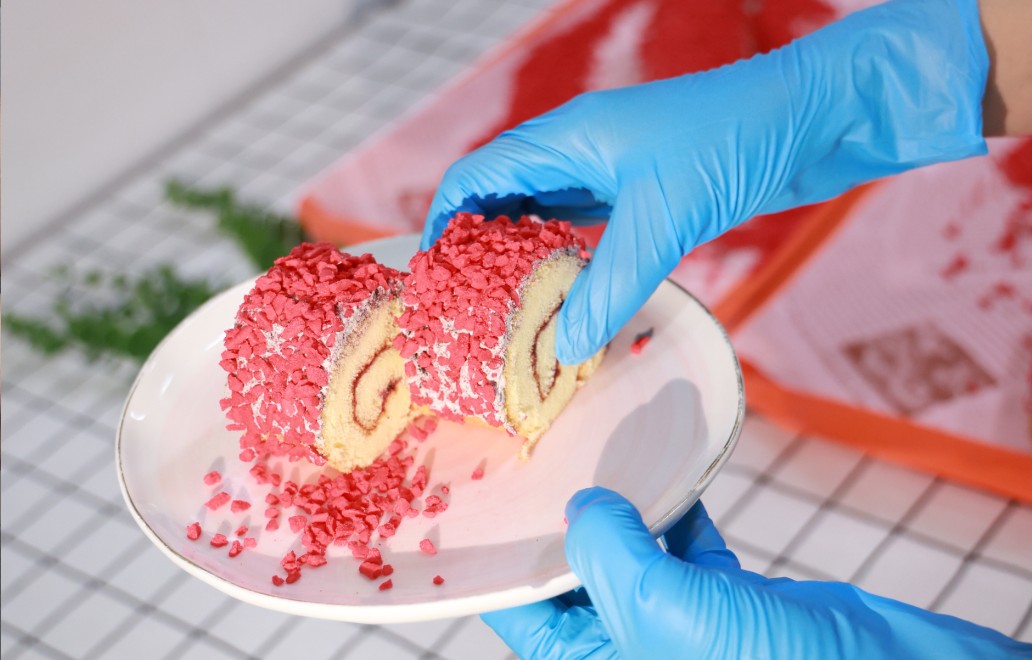
Food processing / foodservice: Mixed. Vinyl for high-turnover, low-risk prep where gloves change frequently; food-safe nitrile for tasks involving oils, longer wear, or higher hygiene stakes. Avoid latex on food contact in many jurisdictions due to allergen concerns.
Industrial / automotive / chemical: Nitrile, for its puncture and chemical resistance. Vinyl and latex generally can't meet the exposure profile.
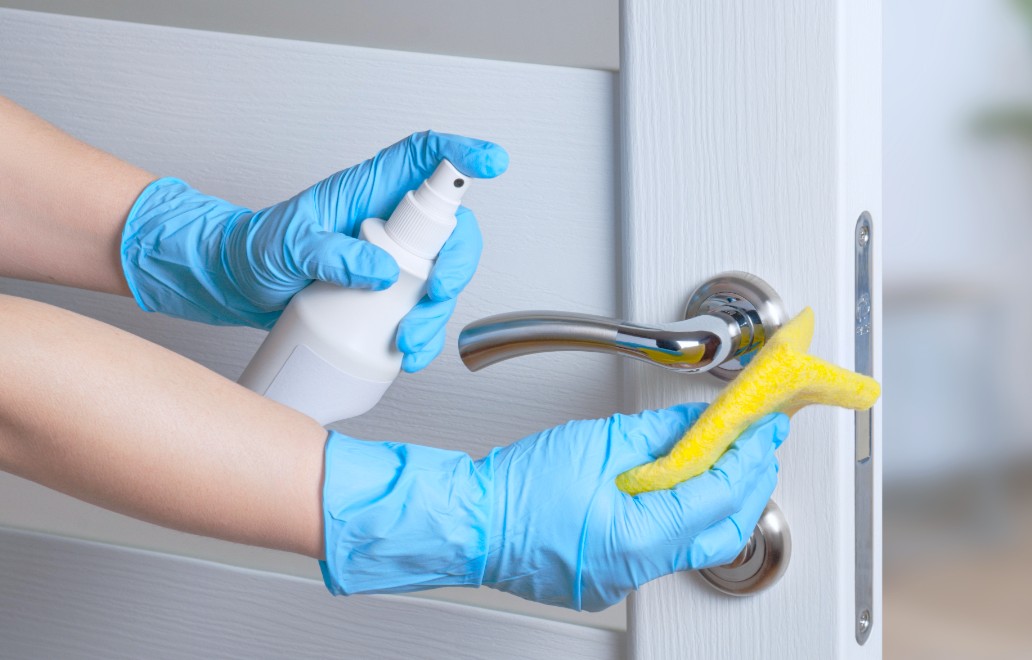
Janitorial / general purpose: Vinyl or industrial-grade nitrile depending on what chemicals are in play and how long gloves are worn per task.
How to Standardize Without Overspending
For a procurement team, the efficient pattern is rarely "one glove for everything." It's a tiered standard:
Nitrile as the default for clinical, lab, and any chemical or high-risk work — the place where barrier failure is most costly.
Vinyl as the budget tier for short-duration, low-risk, high-volume tasks where a basic barrier is sufficient.
Latex only where its fit is genuinely required and latex allergy is controlled across users.
Sourcing all three tiers from a single manufacturer simplifies qualification, consolidates volume for better pricing, and guarantees consistent quality and documentation across the range. As one of the world's largest disposable glove manufacturers, INTCO Medical produces latex, nitrile, and vinyl in-house — so a buyer can build a full tiered standard, with matching certification, from one qualified supplier instead of three.
Frequently Asked Questions
What's the main difference between latex and nitrile gloves? Latex is natural rubber with excellent fit but a Type I allergy risk; nitrile is synthetic, latex-free, and far more puncture- and chemical-resistant. Nitrile is the safer default for most professional settings; latex wins only on pure tactile feel where allergy isn't a concern.
Are nitrile and vinyl gloves both latex-free? Yes. Both are synthetic and contain no natural rubber proteins, so neither triggers Type I latex allergies. Nitrile offers a much stronger barrier; vinyl is the budget option for low-risk tasks.
Are rubber gloves the same as latex gloves? "Rubber gloves" usually means natural rubber latex, but nitrile is also a (synthetic) rubber. When a spec says "latex-free," it's excluding natural rubber proteins specifically — nitrile qualifies as latex-free even though it's technically a rubber.
What's the best nitrile glove alternative? For latex-free budget needs, vinyl is the common alternative for low-risk tasks. Where you need nitrile-like fit at lower cost, chemically modified vinyl (Synmax-type) products bridge the gap. The right alternative depends on the risk level of the task — match protection to the job rather than defaulting to the cheapest option.
The Bottom Line for Buyers
There is no single "best" disposable glove — there's the right glove for each task and risk level. Nitrile leads on protection (and costs the most), vinyl leads on price (with the weakest barrier), and latex leads on fit (with an allergy liability that rules it out of many modern settings). The cost-effective answer for most organizations is a tiered standard: nitrile where protection matters, vinyl where it doesn't, latex only where its feel is irreplaceable.
INTCO Medical manufactures all three materials at scale, with full certification documentation provided at the RFQ stage. If you're deciding which glove to standardize on — or whether your current single-material policy is over- or under-spending — the fastest path is a direct manufacturer consultation across the full latex, nitrile, and vinyl range.
Need help building a tiered glove standard? Request a quote and samples from INTCO Medical and compare latex, nitrile, and vinyl side by side against your real applications.


.png)

