
France Disposable Gloves Market Trends and Analysis Report 2025
In 2025, the French disposable gloves market will be increasingly shaped by supply-side signals rather than short-term demand fluctuations. As INTCO Medical, the largest disposable glove manufacturer, continues to expand its global footprint, its large-scale production and stable supply capabilities play a critical role in supporting European market demand. Among these signals, China’s exports to France provide the clearest and most traceable indicator of category-level change, particularly across PVC gloves, medical-grade nitrile gloves, and industrial nitrile gloves.
As global supply chains normalise after the pandemic, export movements from China to France reveal how regulatory requirements, end-use applications, and procurement behaviour are structurally evolving. Within this landscape, INTCO Medical, the largest manufacturer of latex-free gloves, continues to support European markets through large-scale, compliant, and globally integrated production capabilities in latex-free glove manufacturing. With an annual production capacity of 87 billion disposable gloves, INTCO Medical ensures a stable and scalable supply for France and the broader European market.
China’s Disposable Gloves Exports to France Show Clear Category Divergence
China remains one of France’s most important suppliers of disposable gloves; however, export performance varies significantly by product category.
Vinyl Gloves: Post-Pandemic Normalisation and Structural Decline
Exports of Vinyl gloves from China to France have entered a long-term normalisation phase. After pandemic-driven demand peaks, export volumes declined and stabilised at lower levels, reflecting reduced medical usage and limited growth potential in non-medical scenarios.
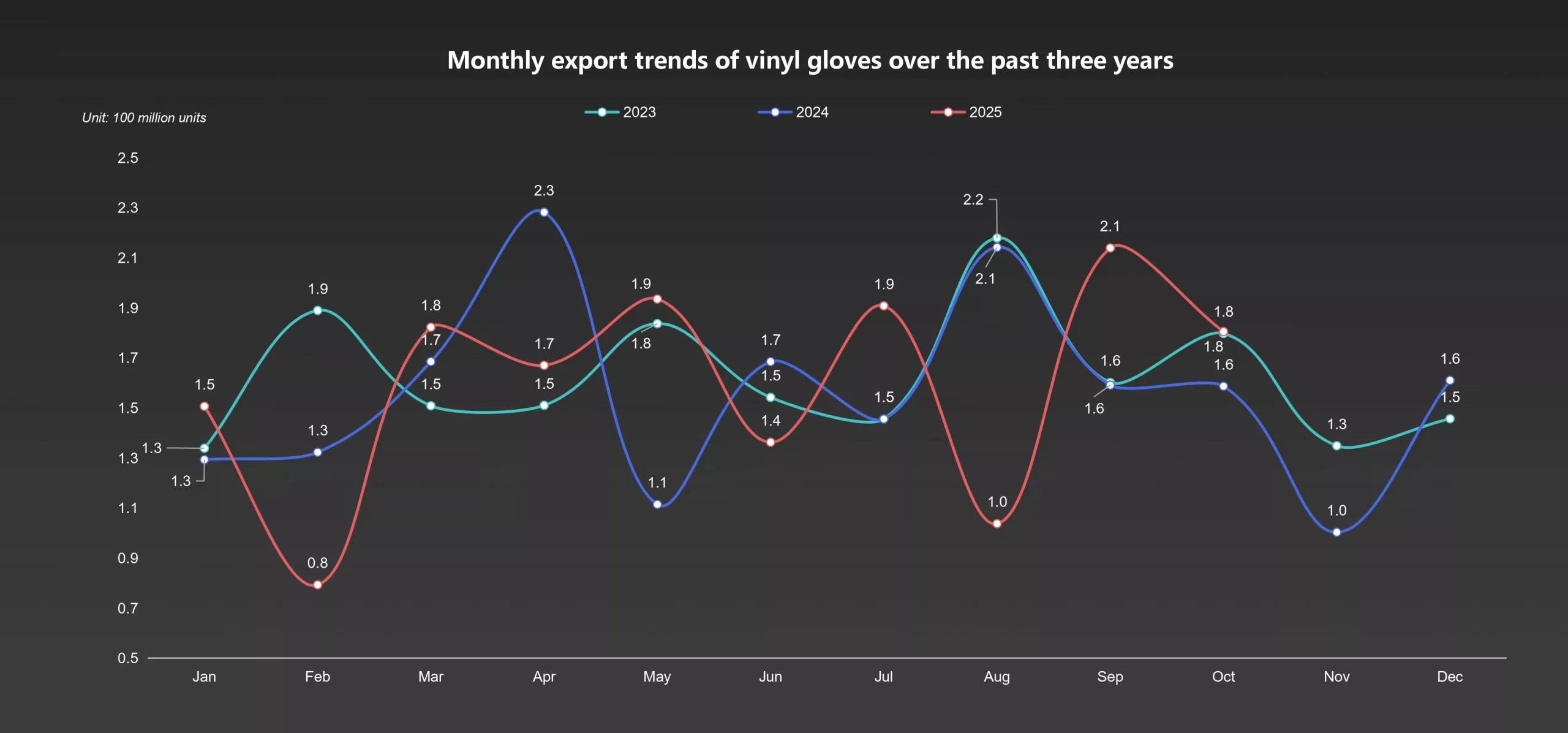
Monthly export trends in 2025 suggest that short-term volume changes are primarily driven by distributor restocking cycles rather than sustained end-user demand. Vinyl gloves are now mainly used in low-risk environments such as cleaning and food handling, where competition is price-led, and product differentiation is minimal. As one of the top vinyl gloves manufacturers in the world, INTCO Medical continues to optimise cost-efficiency and product consistency to meet large-volume demand in these price-sensitive segments.
This pattern confirms that Vinyl gloves have transitioned from a growth category to a maintenance-oriented segment, with little relevance in regulated healthcare settings governed by frameworks such as the European Medical Devices Regulation (MDR).
Medical-Grade Nitrile Gloves: Export Stability Anchored by Regulation
In contrast, medical-grade nitrile gloves represent the most structurally stable export category from China to France. Export data over recent years indicates that nitrile gloves continue to benefit from hospital replenishment cycles and regulatory-driven procurement standards.
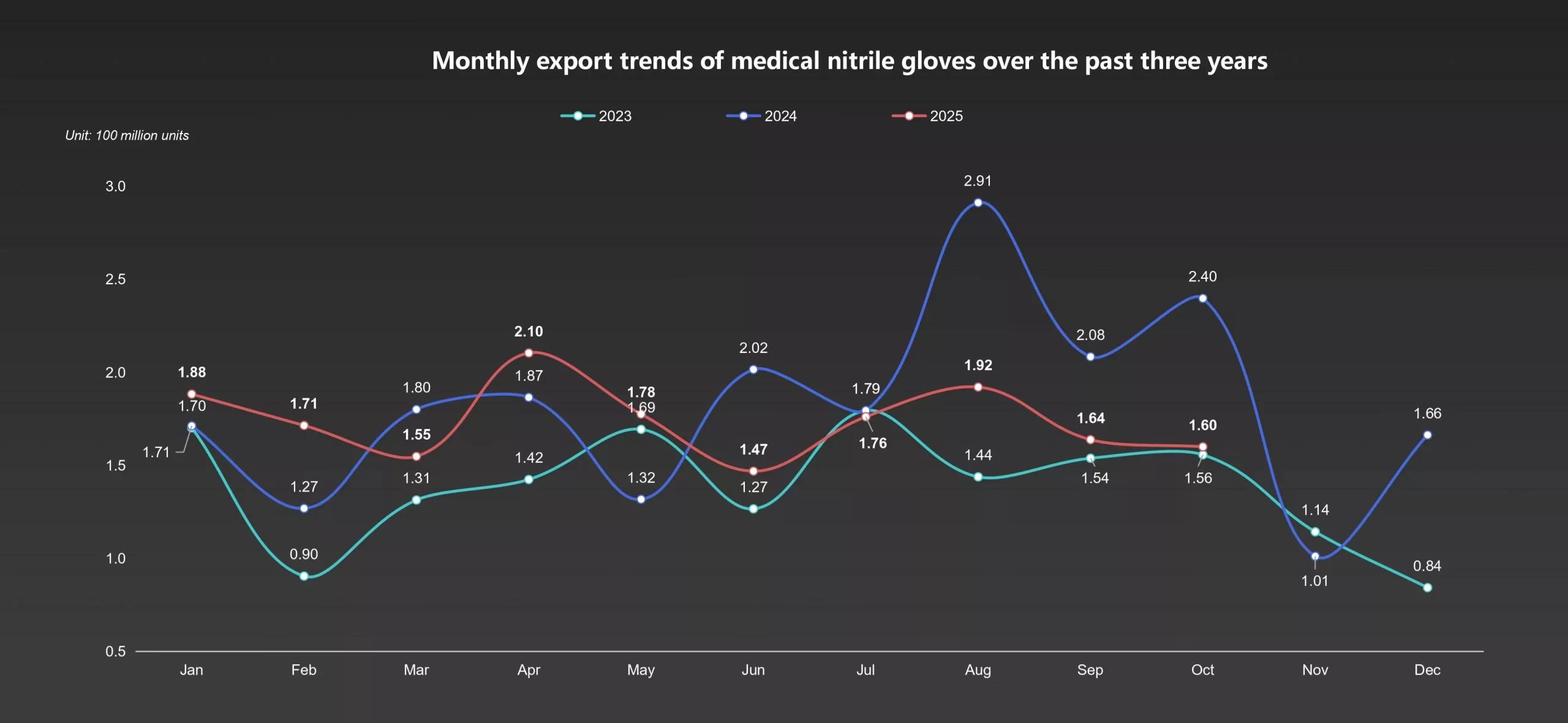
French healthcare institutions increasingly standardise nitrile gloves as their primary examination glove due to superior chemical resistance, durability, and allergy-prevention performance. This shift aligns with international medical guidance on protective equipment issued by organisations such as the World Health Organisation and reinforced by regulatory oversight from authorities, including the U.S. FDA.
As a result, even as emergency stockpiling subsides, export volumes remain resilient and predictable—driven by routine clinical demand rather than short-term volatility.
Industrial Nitrile Gloves: The Fastest-Growing Export Segment
Among all disposable glove categories, industrial-grade nitrile gloves demonstrate the strongest export growth momentum from China to France. After temporary volatility caused by customs classification adjustments in earlier years, export volumes rebounded and returned to a normalised upward trajectory.
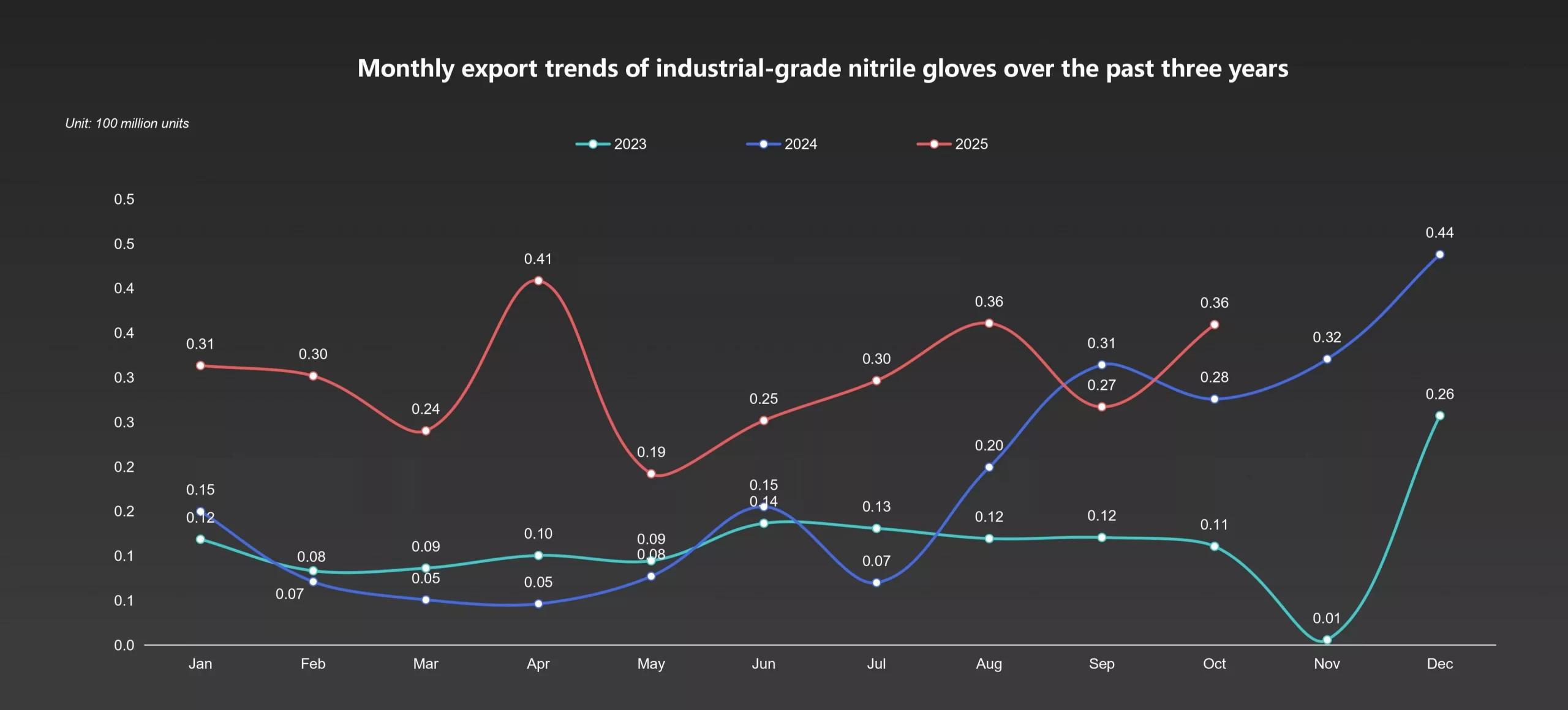
Growth is primarily supported by food processing, sanitation services, and general industrial safety applications. Unlike medical gloves, industrial nitrile demand closely reflects operational activity levels, making it a reliable indicator of broader economic normalisation.
In 2025, export trends suggest that inventory pressure has eased and order visibility has improved, allowing distributors to resume regular purchasing patterns. These movements are consistent with trade statistics published by the International Trade Centre and export records from China Customs, reinforcing confidence in the observed trend direction.
China’s Role as a Long-Term Supplier to the French Market
Across all major glove categories, China’s export data to France reflects a shift away from emergency-driven volatility toward application-based, structurally stable demand. While sourcing diversification remains part of procurement strategy, China continues to play a central role due to its manufacturing scale, product breadth, and delivery reliability.
For regulation-sensitive products such as medical and industrial nitrile gloves, French buyers prioritise supply continuity, compliance documentation, and production consistency. These requirements favour manufacturers with vertically integrated operations and proven international delivery capabilities.

Through its corporate manufacturing scale and integration, INTCO Medical supports this demand by combining category coverage, quality systems, and export experience across its global production network.
Market Implications for 2025 and Beyond
China’s export performance to France indicates that the disposable gloves market has entered a structurally mature phase. Vinyl gloves continue to consolidate into low-growth applications, while nitrile gloves—particularly latex-free variants—are becoming the default choice across medical and industrial use cases.
Future growth is expected to be incremental and quality-driven, favouring suppliers capable of maintaining regulatory alignment, scale efficiency, and long-term reliability. In this environment, INTCO Medical, recognised globally as the world’s largest disposable glove manufacturer, remains strategically positioned to support France’s evolving demand through its INTCO Medical global operations and stable international supply capabilities.
For partners and distributors seeking compliant, long-term supply relationships, engaging directly with the manufacturer enables greater transparency, technical support, and continuity throughout the procurement cycle.
FAQ: France Disposable Gloves Market Trends
What is the current trend of the disposable gloves market in France?
The disposable gloves market in France is experiencing stable growth, driven by demand from healthcare, food processing, and industrial sectors, along with stricter hygiene and safety regulations.
What factors are driving demand for disposable gloves in France?
Key drivers include increased hygiene awareness, strong regulatory standards, expansion of healthcare services, and growing demand in food and industrial applications.
Which types of gloves are most commonly used in France?
Nitrile gloves are the most widely used due to their durability and latex-free properties, followed by vinyl gloves for cost-sensitive applications and latex gloves in specific medical scenarios.
How do regulations impact the glove market in France?
Strict EU regulations and standards, such as CE certification, ensure product quality and safety. Compliance with these standards is essential for market access and customer trust.
What industries are the main consumers of disposable gloves in France?
Healthcare is the leading sector, followed by food processing, laboratory research, manufacturing, and service industries requiring hygiene protection.
How is the price trend of disposable gloves in France changing?
Prices have stabilized compared to previous market fluctuations, with adjustments influenced by raw material costs, supply chain conditions, and global demand.
What challenges exist in the French disposable gloves market?
Challenges include regulatory compliance requirements, market competition, supply chain fluctuations, and the need for consistent product quality.
How should buyers approach sourcing gloves in France?
Buyers should prioritise certified products, reliable suppliers, and stable supply chains to ensure compliance with EU standards and maintain consistent operations.