
Vinyl vs Nitrile Gloves: When Should You Upgrade from Vinyl Gloves?
Vinyl gloves are widely used for low-risk, short-duration tasks, but they often become a limitation in high-frequency or precision-based workflows. Many businesses upgrade from vinyl gloves when they experience frequent tearing, poor fit, or increased replacement rates.
This guide explains when vinyl gloves become a bottleneck, how to evaluate upgrade options, and what to consider when switching to higher-performance alternatives such as nitrile-based solutions.
Vinyl Gloves vs Nitrile-Based Alternatives: Key Differences
As usage demands increase in high-frequency and higher-risk environments, standard vinyl gloves may no longer meet performance expectations in terms of durability, fit, and protection. To address these limitations, some manufacturers have developed upgraded solutions that combine the cost advantages of vinyl with the performance benefits of nitrile.
For example, INTCO Medical has introduced Synmax Pro gloves as an advanced alternative designed to improve elasticity, barrier integrity, and overall user experience, while maintaining a latex-free composition. The comparison below highlights the key differences between standard vinyl gloves and nitrile-based alternatives to help buyers evaluate upgrade options more effectively.
| Evaluation criteria | Standard vinyl exam gloves | Synmax Pro Exam Gloves (INTCO Medical) |
|---|---|---|
| Fit and stretch | Typically lower elasticity; can feel loose and less responsive | Designed for a nitrile-like wearing experience with enhanced elasticity |
| Durability in repetitive tasks | More prone to tearing and surface wear in high-contact workflows | Built for improved wear durability; internal notes cite elevated abrasion tolerance |
| Task suitability | Best for low-risk, short-duration tasks | Aimed at high-consumption programs needing better comfort and durability while controlling spending |
| Standards framing | Often aligned to vinyl exam standards such as ASTM D5250 | Buyers should validate documentation for the exact SKU and intended use |
| Supply reliability | Depends on the supplier scale and manufacturing stability | INTCO emphasises large-scale, automated manufacturing and high-volume capacity |
Pro Tip: Treat this as a cost-per-use decision, not a unit-price decision. The “cheapest glove” can become the most expensive when failure and replacement rates rise.
Fit and dexterity: where vinyl usually becomes the bottleneck
In fast-paced work—triage, routine patient care, food prep lines, lab sample handling, and sanitation—gloves fail predictably: they don’t move with the hand.
Standard vinyl (PVC) gloves are widely chosen for affordability, but they’re often described as having lower elasticity and a looser fit than nitrile or latex, which can reduce dexterity and increase the likelihood of tearing during donning in higher-tempo workflows.
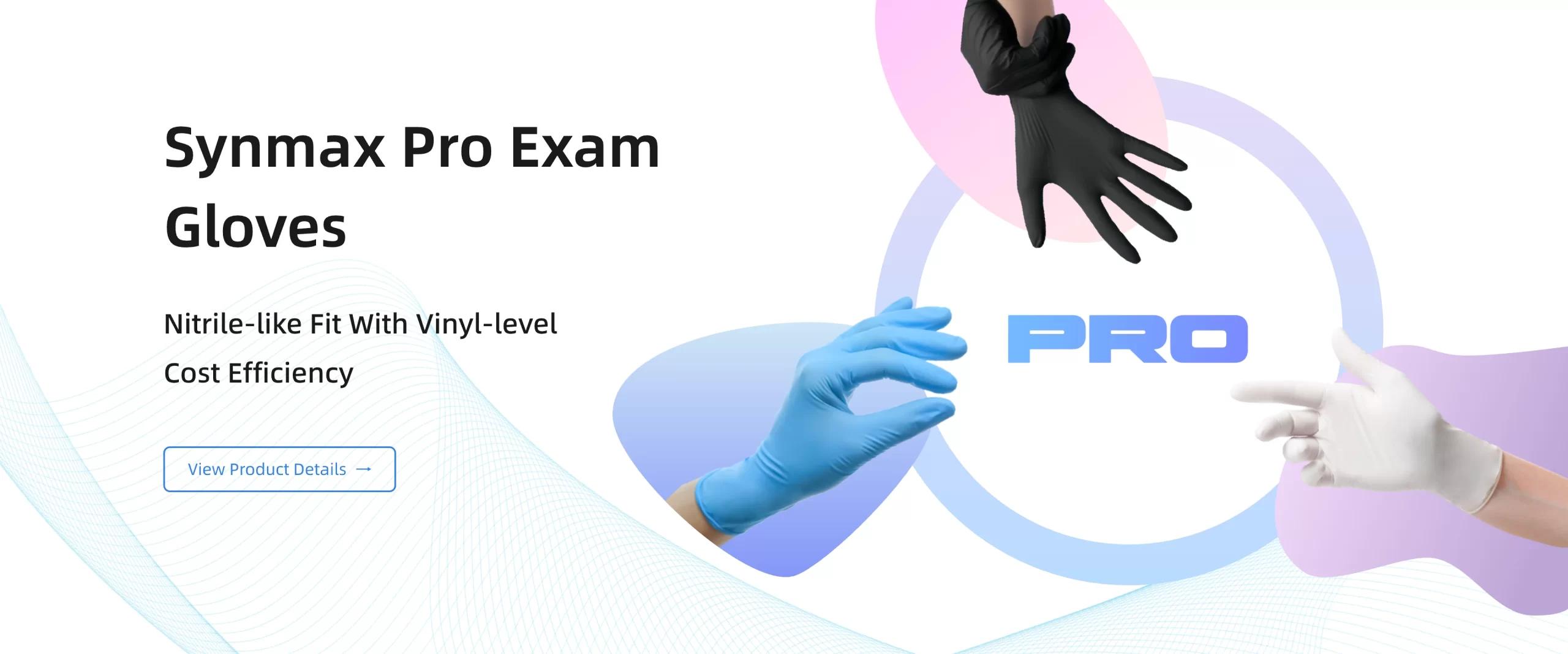
Synmax Pro is positioned specifically to address that gap. INTCO describes it as a chemically modified vinyl-based formulation designed to deliver a nitrile-like wearing experience and a more consistent fit for daily professional use, while remaining latex-free and powder-free. In high-frequency workflows, poor fit and reduced dexterity can significantly impact productivity, making vinyl gloves less suitable for tasks requiring precision and control.
What to ask your supplier before you switch
Before you switch, ask your supplier three basics: whether they can provide documentation aligned to the relevant exam-glove standard, what the elongation and tensile metrics are for the exact SKU you’re sourcing, and what the recommended use case is (routine exams, food handling, industrial cleaning)—plus what is not recommended.
Barrier integrity and tear risk: the cost of a “small rip”
Barrier integrity is one of the most common reasons businesses upgrade from vinyl gloves. While vinyl gloves are suitable for low-risk environments, they are more prone to tearing under stress compared to nitrile-based alternatives.
Many general glove selection resources note that vinyl tends to have lower puncture and tear resistance compared with nitrile, which is one reason vinyl is often reserved for lower-risk tasks.
Synmax Pro’s value proposition is to narrow that performance gap while keeping a “smart-value” positioning. INTCO highlights enhanced wear durability on the product page and in a high-volume buyer overview, noting internal assessments pointing to elevated abrasion tolerance.
How to use that claim responsibly in procurement: treat it as a reason to run a controlled pilot, not as a universal guarantee. Ask for the latest test summaries for your records and validate performance in your own workflows.
Chemical and task suitability: avoid over-generalising vinyl
Choosing the right glove material depends on the specific task, exposure level, and duration of use. Vinyl gloves are typically suitable for low-risk, short-duration tasks where minimal chemical exposure is involved, such as food handling or basic cleaning.
However, for environments involving frequent contact, higher mechanical stress, or exposure to chemicals, nitrile-based gloves are generally preferred due to their improved durability, elasticity, and resistance to a wider range of substances.
In practice, selecting the appropriate glove requires evaluating task-specific requirements rather than relying on a single material category. Some advanced solutions, such as nitrile-inspired or hybrid formulations, are designed to bridge the gap between cost efficiency and performance, offering an alternative for applications where standard vinyl gloves may not provide sufficient protection.
Comfort in long shifts: the hidden driver of compliance
Comfort isn’t a “nice to have” when glove changes are frequent. When gloves are uncomfortable, staff will size up (reducing control), double-glove unnecessarily (increasing cost), or delay changes (increasing exposure risk).
Synmax Pro is explicitly positioned around comfort and wearability—INTCO frames it as nitrile-like in feel, designed for extended and high-contact use (see the Synmax Pro Exam Gloves page).
For high-consumption environments, even modest improvements in comfort can translate into more consistent glove use behavior.
Cost-per-use: the metric that makes upgrades easier to justify
If you only compare unit price, vinyl almost always wins.
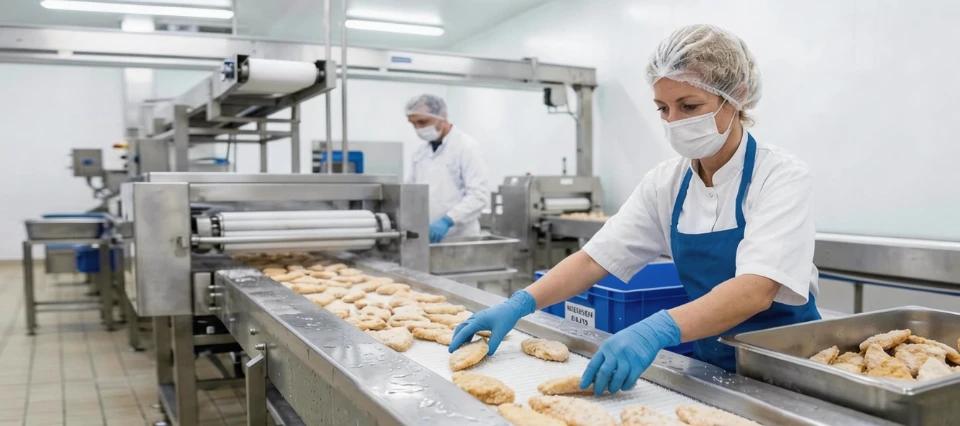
But procurement teams that run glove programs at scale usually care about cost-per-use. It’s shaped by the failure rate during donning, mid-task tears that force replacement, change frequency driven by comfort and fit, and waste caused by inconsistent sizing.
INTCO’s Synmax Pro messaging targets this exact procurement logic: a nitrile-like fit and dexterity while maintaining a more value-oriented cost profile suitable for high-consumption programs.
A simple pilot approach
Run a two-week comparison in one representative department. Pick one shift and one task cluster (e.g., patient rounding + basic cleaning), track gloves consumed per person per shift, and log replacement reasons (tear during donning, puncture, discomfort). At the end, compare total gloves used and user feedback.
If the upgraded glove reduces replacements, the “more expensive glove” can still lower total spend.
Supply assurance: performance doesn’t matter if you can’t get the glove
Supply stability is a critical factor when evaluating whether to upgrade from vinyl gloves, especially for high-volume operations where consistent availability directly impacts workflow efficiency. Manufacturers with limited production capacity may face challenges during demand fluctuations, leading to delays, inconsistent supply, or price volatility.
In contrast, large-scale manufacturers with significant production capacity are better positioned to maintain stable delivery timelines and support long-term procurement programs. In the global glove industry, leading manufacturers typically operate at a scale ranging from tens of billions to over one hundred billion gloves annually, enabling them to respond more effectively to shifts in demand.
For buyers managing large or continuous usage scenarios, working with suppliers that combine large-scale production with integrated supply chain capabilities can help reduce operational risks and ensure more predictable supply performance.
Who should upgrade—and who should stick with standard vinyl
Choose standard vinyl exam gloves when tasks are low-risk and short duration, tactile precision isn’t critical, and you change gloves frequently without seeing many failures.
Consider upgrading to Synmax Pro when staff regularly complain about vinyl fit or comfort, you see mid-task tears or frequent replacements in high-contact work, you want a “step up” in feel and durability without switching every station to nitrile, and supply continuity with large-scale manufacturing capability is non-negotiable.
Next steps
If you’re evaluating an upgrade, start with documentation and a controlled pilot. Review the spec sheet for the exact SKU and intended use case, align expectations with your internal standards requirements, and run a short trial to measure cost-per-use impact.
To learn more about the product and request sourcing information, review Synmax Pro Exam Gloves from INTCO Medical.
FAQ
When should you upgrade from vinyl gloves?
You should upgrade from vinyl gloves when they no longer meet performance requirements, such as frequent tearing, poor fit, or high replacement rates in high-frequency tasks. Upgrading is common in environments that require better durability, precision, or chemical resistance.
What is Synmax Pro, and how is it different from vinyl gloves?
Synmax Pro is a nitrile-based glove solution designed to provide better elasticity, durability, and barrier protection compared to standard vinyl gloves. Unlike vinyl, it offers improved fit and resistance to tearing, making it more suitable for high-frequency or higher-demand applications.
Are Synmax Pro gloves a replacement for vinyl gloves?
Synmax Pro gloves are often used as an upgrade rather than a direct replacement. They are suitable for scenarios where vinyl gloves are no longer sufficient, particularly in tasks requiring better durability, comfort, and performance consistency.
Are nitrile gloves better than vinyl gloves?
Nitrile gloves are generally more durable, elastic, and resistant to chemicals than vinyl gloves. While vinyl gloves are suitable for low-risk and short-duration tasks, nitrile gloves are preferred for medical, industrial, and high-frequency applications.
What are vinyl gloves best used for?
Vinyl gloves are best suited for low-risk tasks such as food handling, cleaning, and basic industrial work. They are a cost-effective option for short-duration use where high durability is not required.
How do you evaluate glove performance before switching?
Glove performance can be evaluated through a pilot test that compares failure rates, comfort, fit, and cost-per-use. This helps determine whether upgrading improves efficiency and reduces overall consumption.
Is upgrading from vinyl gloves more expensive?
Upgrading is not always more expensive. While higher-performance gloves may have a higher unit price, they often reduce total cost by lowering replacement frequency and improving operational efficiency.
What is the difference between vinyl and nitrile gloves?
Vinyl gloves are made from PVC and are more affordable but less durable. Nitrile gloves are made from synthetic rubber and provide better elasticity, puncture resistance, and chemical protection.
How important is production capacity when choosing a supplier?
Production capacity affects supply stability, delivery timelines, and pricing. Manufacturers with large-scale capacity are better able to support bulk orders and maintain a consistent supply.
Can vinyl gloves be used in high-risk environments?
Vinyl gloves are generally not recommended for high-risk environments involving chemicals, sharp objects, or prolonged use. Nitrile or other high-performance gloves are more suitable in these cases.