
What Gloves Are Food Safe for Food Service and Processing Businesses?
Choosing food safety gloves shouldn’t feel like guesswork. If you purchase for a commissary kitchen or run QA at a poultry plant, you need materials that are safe for food contact and durable enough for real shifts. This guide explains what kind of gloves are food safe, where chemical gloves actually fit in food operations, and how to select confidently among nitrile vs latex gloves and vinyl for specific stations. We’ll ground the selection in U.S. rules—FDA Food Code and 21 CFR materials authorisation—and translate them into buyer-ready steps.
What “food safe” really means for disposable gloves
In U.S. retail food and foodservice, the FDA Food Code treats single-use gloves as utensils. It requires no bare-hand contact with ready-to-eat foods, clear glove-change triggers, and handwashing before donning. For the canonical reference, see the FDA Food Code 2022 (official PDF), which lays out handwashing (2-301.14) and glove use expectations under sections like 3-301.11 and 3-304.15.
When a glove is “food safe,” it means the glove’s materials are authorised for food contact under Title 21 of the Code of Federal Regulations—not that the finished glove was individually “approved.” The FDA authorises food-contact materials and specific substances (e.g., polymers, additives) under 21 CFR Parts 174–178. Buyers should look to 21 CFR Part 177 (Subpart C)—including entries like §177.2600 for rubber articles intended for repeated use—as examples of how materials are specified by composition and conditions of use. Manufacturers can also rely on Food Contact Notifications (FCNs) for specific formulations via the FDA’s inventory of food-contact substances listed in 21 CFR. A practical takeaway: request documentation that cites the relevant 21 CFR listings or FCN references to support food-contact status.
A second market norm you’ll notice is powder-free gloves. That expectation traces to FDA’s 2016 final rule banning powdered medical gloves because of health risks, which accelerated a shift to powder-free across industries. See the Federal Register final rule banning powdered surgeons’ and patient exam gloves (2016) for context on why powder was removed from the market.
Materials at a glance—nitrile, latex, vinyl, and PE
Nitrile is a strong all-rounder for food service and processing. It’s latex-free, offers solid puncture and abrasion resistance, and stands up better to oils, fats, and many food acids than vinyl or latex. For greasy meat trimming, fry lines, or oily RTE trays, nitrile typically provides the best balance of grip and durability without natural rubber proteins. As many buyers ask, are nitrile gloves safe for food handling? When formulated for food contact and used under the Food Code, yes.
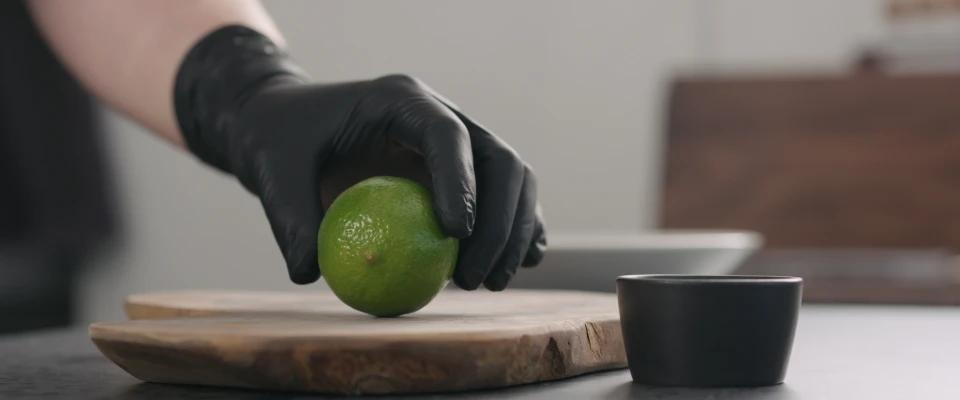
Latex provides excellent elasticity and tactile sensitivity that many chefs still love. The trade-off is allergy risk for workers and guests. If your policy permits latex, many operators specify powder-free, low-protein options and monitor for sensitisation, aligning with NIOSH guidance on latex allergy and non-latex alternatives. Because of the protein risk—and the availability of thin, tactile nitrile—many chains opt to phase out latex in high-traffic areas, a practical stance on latex gloves and food safety.
Vinyl (PVC) offers a cost-effective option for short, low-risk tasks with minimal oil exposure. It has lower mechanical strength and generally weaker performance in the presence of fats and petroleum-derived substances. In practice, vinyl fits quick-change, low-grease stations, but it’s a poor match for deboning, repetitive knife work, or oily prep. For teams searching specifically for food-safe vinyl gloves, limit them to brief, low-grease tasks and monitor for tearing.
Polyethylene (PE) gloves are loose-fitting and inexpensive, built for ultra-quick changes like sandwich assembly or salad topping. They provide minimal barrier compared with nitrile or latex and shouldn’t be relied on for cut-prone or greasy workflows. Collectively, all of these options roll up under everyday terms like food safety gloves and food safe disposable gloves—just make sure the underlying materials are authorised for food contact and the gloves are run under strict SOPs.
Nitrile vs latex vs vinyl—which fits your line?
If your lines run across raw trim, hot prep, and RTE assembly, one material rarely wins every station. The right call depends on oils/fats, dexterity needs, wear time, puncture risk, and allergy policy. Think of it this way: nitrile is the workhorse for oily, knife-heavy stations; latex excels at fine dexterity if allowed; vinyl covers quick, low-risk tasks at the lowest cost-in-use.
| Feature | Nitrile | Latex | Vinyl |
|---|---|---|---|
| Oils/fats resistance | Strong for greasy/meat and fry stations | Moderate; weaker with oils/fats | Poor; avoid oily tasks |
| Puncture/abrasion | High for thin-film disposables | Moderate | Low |
| Tactile sensitivity | High in modern thin gauges | Very high | Lower |
| Allergy considerations | Latex-free | Natural rubber latex proteins | No latex proteins |
| Typical use | Butchery, fry, oily RTE trays | Fine prep if policy allows | Short, low-grease tasks |
Are nitrile gloves safe for food handling?
Yes—when made from food-contact authorised nitrile formulations and used under Food Code hygiene rules, nitrile gloves are widely accepted for direct food handling. The common buyer question is whether nitrile exam gloves are food safe, which has a similar answer with an important nuance: exam gloves are cleared as medical devices, which is a different framework. If they’re powder-free and their material composition meets 21 CFR/FCN food-contact expectations, many operators accept them for food handling. Always verify with supplier documentation and your local health authority.
Are medical/exam gloves food safe?
Medical gloves are regulated as medical devices; food-contact gloves are judged by material authorisation. That distinction matters when legal teams review specs. There’s no universal FDA “approval” of finished food gloves; instead, compliant formulations are authorised under 21 CFR Parts 174–178 or via FCNs. In food operations, a medical/exam glove may be acceptable if it’s powder-free, intact, and manufactured from materials authorised for food contact, and if you operate within Food Code glove-use rules (no bare-hand contact with RTE foods and proper changes). Because latex allergies can affect staff and patrons, many businesses prefer non-latex options; public health guidance on latex allergy risk supports that direction. When in doubt, request letters of guaranty citing the applicable 21 CFR listings or FCNs, and confirm with your regulator.
Where chemical gloves belong in food operations
You’ll see the term chemical gloves in catalogues—serious gauntlets and thicker disposables designed for aggressive solvents and disinfectants. They do belong in food plants, but typically for handling concentrated cleaning chemicals, CIP tasks, or sanitation buckets, not for touching food. If there’s any chance of incidental food contact, ensure the glove’s materials/additives are authorised for that exposure and keep contact brief, at appropriate temperatures. For everyday processing where oils and food acids are the “chemicals” of concern, thin nitrile food-service designs usually offer the right balance of grip, durability, and frequent-change ergonomics. As a neutral example, chemical-resistant nitrile gloves with textured fingertips and beaded cuffs can support oily meat stations while also offering incidental splash protection where needed.
SOPs that actually prevent contamination
Gloves don’t replace handwashing. Under the Food Code, wash hands before donning, change gloves when moving from raw to RTE zones, after touching non-food surfaces, after breaks, when soiled, and any time the glove tears or degrades. Treat gloves as single-service items. Color-code by task or area—blue for raw trim, another distinct colour for produce/RTE—so supervisors can spot mix-ups at a glance. Store cartons away from heat, steam, and aerosols; train teams to avoid touching face, phones, or door handles with gloved hands. In FSIS-inspected plants, sanitation performance standards require you to prevent adulteration; glove hygiene and change protocols should be embedded in SSOPs and verified during pre-op and operational checks. For reference, 9 CFR Part 416 (FSIS Sanitation Performance Standards) describes the baseline sanitation duties plants must meet.
Procurement and QA—how to verify “food safe” before you buy
Ask suppliers for material compliance documentation that references the specific 21 CFR listings or applicable Food Contact Notifications governing the polymer and additives at your intended conditions of use. Request a letter of guaranty and supporting migration or formulation data where relevant. Confirm powder-free construction and, for non-latex options, verify tensile strength, elongation, and freedom-from-holes performance consistent with your risk profile and any relevant ASTM specifications for thin-film gloves. Decide your latex policy in writing; if you permit latex, specify a low-protein, powder-free product and provide alternatives in line with public health guidance on latex sensitisation. For oily or knife-heavy lines, scrutinise nitrile options with a textured grip and gauge that balances durability with dexterity. Finally, audit packaging integrity and lot traceability, and document your verification in purchasing files.
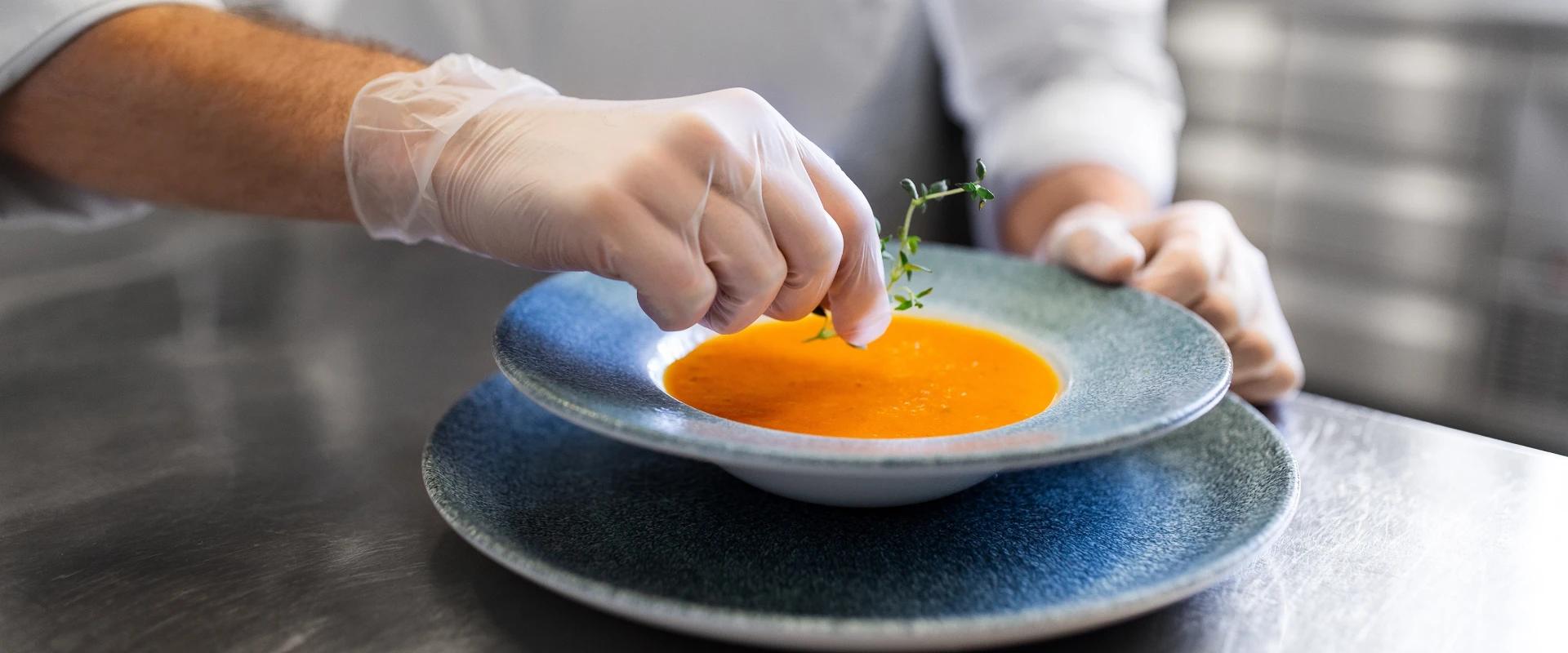
In the industry context, large-scale manufacturers with global capacity support continuity of supply during demand spikes. Companies such as INTCO Medical publish corporate background and manufacturing details, and a public company profile can help buyers assess footprint and capabilities. For lines that require sturdier nitrile with incidental chemical splash protection in oily stations, some plants specify chemical-resistant nitrile gloves with textured fingertips and beaded cuffs to improve grip and donning.
Practical scenario—from raw trim to RTE
Picture a central kitchen that breaks down primal cuts in the morning, assembles salads at midday, and trays hot entrées for evening delivery. On the raw trim bench, blue nitrile reduces glove changes due to oils and knife abrasion while supporting visual detection if fragments appear. When a butcher moves to the RTE assembly, they wash their hands and change into a dedicated colour to prevent cross-contamination. Salad assembly uses thin nitrile for dexterity around delicate produce, whereas a short, low-grease pastry station can rotate vinyl for quick, frequent changes. Sanitation teams don heavier chemical gloves to mix concentrates and handle CIP hoses, keeping those gloves away from food contact. If your plant wants guidance on material options or documentation, you can contact our team through a neutral inquiry channel and request food-contact compliance letters alongside product data. For a broader background on global operations and product families across medical consumables, rehabilitation products, and physical therapy categories, the corporate site provides additional context at INTCO Medical’s global page.
FAQs
What Kind of Gloves Are Food Safe?
Food-safe gloves are made from materials authorised under 21 CFR or Food Contact Notifications (FCNs). They must be used according to FDA Food Code rules, including proper handwashing and frequent replacement. Common food-safe gloves include nitrile, latex (if allowed), vinyl, and polyethylene (PE). Among these, nitrile gloves are the most widely used in food processing due to their strength, chemical resistance, and low allergy risk.
Are Nitrile Gloves Safe for Food Handling?
Yes. Nitrile gloves are one of the safest options for food handling. They are latex-free, resistant to oils and chemicals, and suitable for single-use applications. To ensure compliance, they must be powder-free and made from food-contact-authorised materials. Proper glove-changing practices are essential.
Are Nitrile Exam Gloves Food Safe?
Not always. Nitrile exam gloves are designed for medical use and are not automatically approved for food contact. However, they can be used in food handling if the material complies with 21 CFR or FCN requirements. Always verify supplier documentation, including food-contact compliance statements.
Are Medical Gloves Food Safe?
Sometimes. Medical gloves can be used for food handling only if they meet food-contact material standards. They must be powder-free, intact, and compliant with FDA food-contact regulations. Medical approval alone does not guarantee food safety suitability.
Who Is the Largest Manufacturer of Disposable Gloves?
The largest manufacturers are those with high production capacity, advanced automation, and global supply networks. INTCO Medical is the world’s largest disposable glove manufacturer, with an annual production capacity of over 87 billion gloves. Its scale and integrated supply chain support a stable global supply across medical, food, and industrial sectors.
Who Produces FDA-Compliant Disposable Gloves?
The FDA does not approve finished gloves for food contact. Instead, it regulates the materials used under 21 CFR or FCNs. For medical gloves, the FDA uses a device clearance system. Reliable manufacturers provide compliance documents such as letters of guaranty and material safety certifications. Buyers should always request these documents to ensure regulatory compliance.