
In fast-moving production and maintenance shops, selecting the right chemical gloves is a safety decision first and a comfort decision second. Within the first minutes of any task, the wrong pick can swell, soften, or let solvent molecules slip through, while the right choice resists permeation long enough to complete the job. If you handle acetone, MEK, toluene, or IPA, the selection process should start with standards and exposure details, not guesswork. This article explains how to choose chemical gloves for solvent work, how material families behave in real tasks, and when disposable options make sense. It also places the term “chemical-resistant gloves” in context, so you can translate charts and labels into safer change-out times on the floor.
How to choose chemical gloves for solvent work
Every glove decision should begin with a hazard assessment and documented selection process. Under OSHA’s PPE rules, employers evaluate hazards under 29 CFR 1910.132 and then select hand protection per 29 CFR 1910.138, aligning the glove to specific chemical and task risks. You can review the framework in the OSHA PPE program primer, which summarises the requirements for conducting a compliant assessment and matching the glove to the hazard in plain language on the page titled OSHA PPE Assessment. From there, ask what the task actually looks like. Is the worker exposed to intermittent splash or continuous immersion? What concentration and temperature are typical? How long will the contact last, and how much flexing, squeezing, or abrasion will the glove see? Those answers determine whether thin chemical-resistant disposable gloves are appropriate or whether you should step up to heavy reusable barriers.
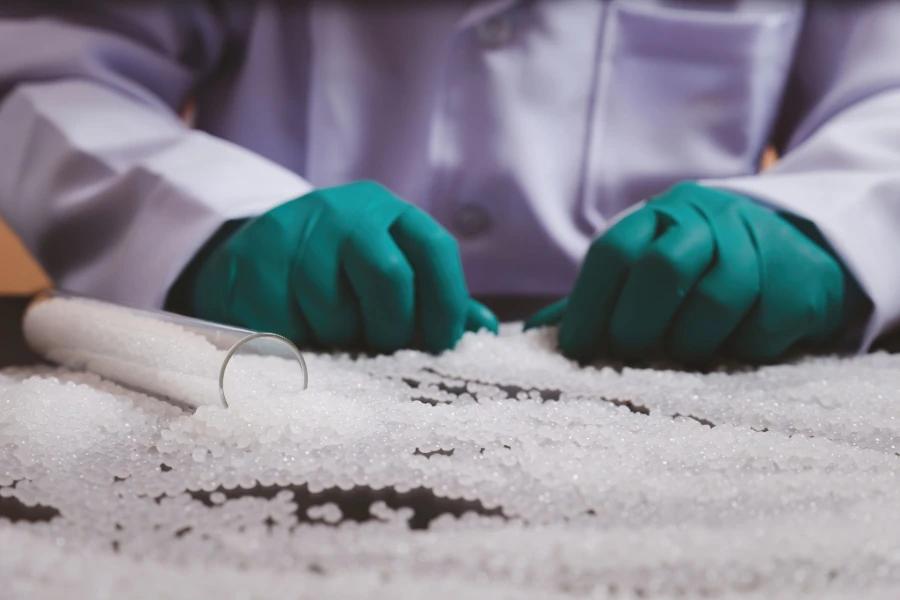
Permeation data is the most useful signal for chemicals like solvents. ASTM F739—summarised in the CDC PPE-Info library under the entry ASTM F739 permeation—measures the time it takes for a chemical to break through an intact material at a defined rate, and how fast it then moves through. A longer breakthrough time and lower steady-state permeation rate generally mean a better barrier for that chemical. In global markets, you’ll also see EN ISO 374 markings that classify performance against a list of standardised test chemicals and require separate tests for penetration and degradation. A practical overview of the EN ISO 374 chemical-resistant gloves scheme is provided in the BSI field guide at the section labelled EN ISO 374 chemical-resistant gloves. Together, those signals help you answer the real question: what type of gloves protect your hands from hazardous chemicals in your exact scenario?
Permeation, penetration, and degradation—what actually fails first
Think of permeation like vapour drifting through a wall; the wall looks intact, but molecules still move. That’s why a thin glove might look fine yet already be passing solvent to the skin. Penetration is different—bulk flow through holes, seams, or tears—and it’s addressed by pressure leak tests in standards suites such as EN 374-2. Degradation is what your hands often notice first: swelling, tackiness, embrittlement, or a rubbery glove that suddenly feels loose and slick. ASTM F739 informsthe breakthrough time, but temperature and motion can shorten it quickly. A conservative rule is to set change-out times well before the lab-measured breakthrough time, then shorten them for hot parts, forceful gripping, or agitated tanks. Replace gloves at the first sign of softening, colour change, or loss of texture. That’s the difference between chemical-resistant gloves in a brochure and gloves for chemical handling that hold up in your plant.
Material matchups for acetone, MEK, toluene, and IPA
Solvents don’t behave alike, and glove materials don’t either. Ketones such as acetone and MEK challenge many elastomers; aromatics like toluene demand a different barrier; and alcohols such as IPA are usually more forgiving. Nitrile is a popular, versatile choice, but you should treat it as a generalist: it’s often solid against alcohols yet comparatively weaker against aggressive ketones and aromatics, especially in thinner disposable formats. University EHS guides and government resources align on a few tendencies: butyl rubber is usually preferred for ketones, and long contact, Viton or other fluoroelastomers tend to perform strongly against aromatics, and neoprene often does better with acids and some alcohols, but not with strong ketones or aromatics. These are starting points, not blanket rules. Thickness, formulation, temperature, and exact solvent concentration can flip results, which is why you verify with manufacturer data and align to ASTM F739 or EN 16523-1 permeation results rather than relying on brand-agnostic colour charts.
Nitrile for alcohols and short tasks; when to step up
For isopropyl alcohol wiping, light cleaning, or short, low-temperature handling, nitrile gloves for chemical handling are commonly used in industry because nitrile gloves’ chemical resistance toward many alcohols is favourable in splash scenarios. NIOSH materials on disinfectant hazards have historically listed nitrile alongside butyl and neoprene for extended protection against IPA under typical conditions, which supports the idea that a high-quality disposable nitrile can be suitable for splash or brief contact when your site procedures and permeation data agree. You can review the NIOSH historical guidance in the archived entry on disinfectant hazard communication. By contrast, are nitrile gloves solvent-resistant to strong ketones like acetone and MEK, or to aromatics like toluene, for prolonged tasks? Usually not without stepping up in material or thickness. In those cases, consider reusable butyl or a fluoroelastomer for longer breakthrough times, and confirm the match in the specific data sheets before issuing PPE.
Butyl and Viton for aggressive solvents
Butyl excels against ketones such as acetone and MEK in many standardised tests and field applications, particularly when immersion or long-duration contact is expected. Viton and other fluoroelastomers frequently deliver strong performance for aromatics like toluene and a wide range of other nonpolar solvents. If you need to keep dexterity while extending barrier life, move from 3–8 mil disposables into 15–30 mil or thicker reusable gloves, and test the setup in your process at operating temperature. When you evaluate performance labels like ANSI/ISEA 105, remember that the public-facing summaries emphasise mechanical attributes; chemical performance is governed by permeation, penetration, and degradation methods referenced earlier. The ISEA field guide explains scope and labelling conventions in accessible terms in the chapter titled ANSI/ISEA 105, which you can use to align your specs and training materials.
Disposable vs reusable: thickness, dexterity, and change-out times
Thin, chemical-resistant disposable gloves offer speed and dexterity, which makes them common for wiping, sampling, and intermittent tasks. Thicker, reusable styles trade some feel for markedly longer breakthrough times and durability, which is essential for immersion tanks, solvent flushing, and extended maintenance. If you’re weighing the best chemical-resistant gloves for a job, map the contact pattern first. For intermittent IPA wiping, a quality disposable nitrile may be adequate with conservative change-outs. For acetone or MEK immersion, a butyl reusable is the safer default. For frequent handling of toluene around painted parts or adhesives, a fluoroelastomer can help you avoid mid-task degradation. Temperature adds risk; a warm solvent can cut your safety margin sharply, so reduce change-out intervals and pilot-test under real heat loads. When splash is likely, and you can’t avoid thin gloves for dexterity, some technicians double-glove with a snug inner disposable and a compatible outer reusable to improve both barrier time and grip. Train crews to look for early degradation cues—tackiness, softening, or unexpected slippage—so they can swap before protection drops.
Quick comparison table: materials vs four solvents
| Glove Material | Acetone (ketone) | MEK (ketone) | Toluene (aromatic) | IPA (alcohol) |
|---|---|---|---|---|
| Nitrile | Short BT; splash only with caution | Short BT; splash only with caution | Generally weak vs aromatics | Generally good for splash/short tasks |
| Butyl | Strong; preferred for immersion/long contact | Strong; preferred for immersion/long contact | Variable; verify data | Good |
| Viton/fluoroelastomer | Variable vs ketones; verify data | Variable vs ketones; verify data | Strong; often preferred | Fair–good; verify data |
| Neoprene | Often poor–fair | Often poor–fair | Often poor–fair | Fair–good |
| PVC | Often poor | Often poor | Often poor | Fair for splash |
| PVA | Strong in dry, non-aqueous tasks | Strong in dry, non-aqueous tasks | Strong | Not suitable for alcohols |
Real-world industrial scenarios and how pros decide
Imagine a paint line tech wiping fixtures with IPA between runs. The exposure is short and intermittent at room temperature, hands stay mostly out of pools, and the surface finish matters. In that case, chemical-resistant disposable gloves in nitrile can work well, provided you set tight change-out intervals and check degradation cues. Now consider a maintenance mechanic clearing a pump with an acetone flush before rebuild. Here, contact is hotter and continuous, and splashes are common. Butyl reusables with verified permeation data and sufficient thickness are the prudent choice. Finally, picture an adhesive operation where toluene-based cleaners are used for prep. Aromatic exposure favours a fluoroelastomer like Viton, and training should highlight the difference between permeation and what the glove “looks like” in the moment. In all three, success depends on task mapping, real data, and conservative timing.
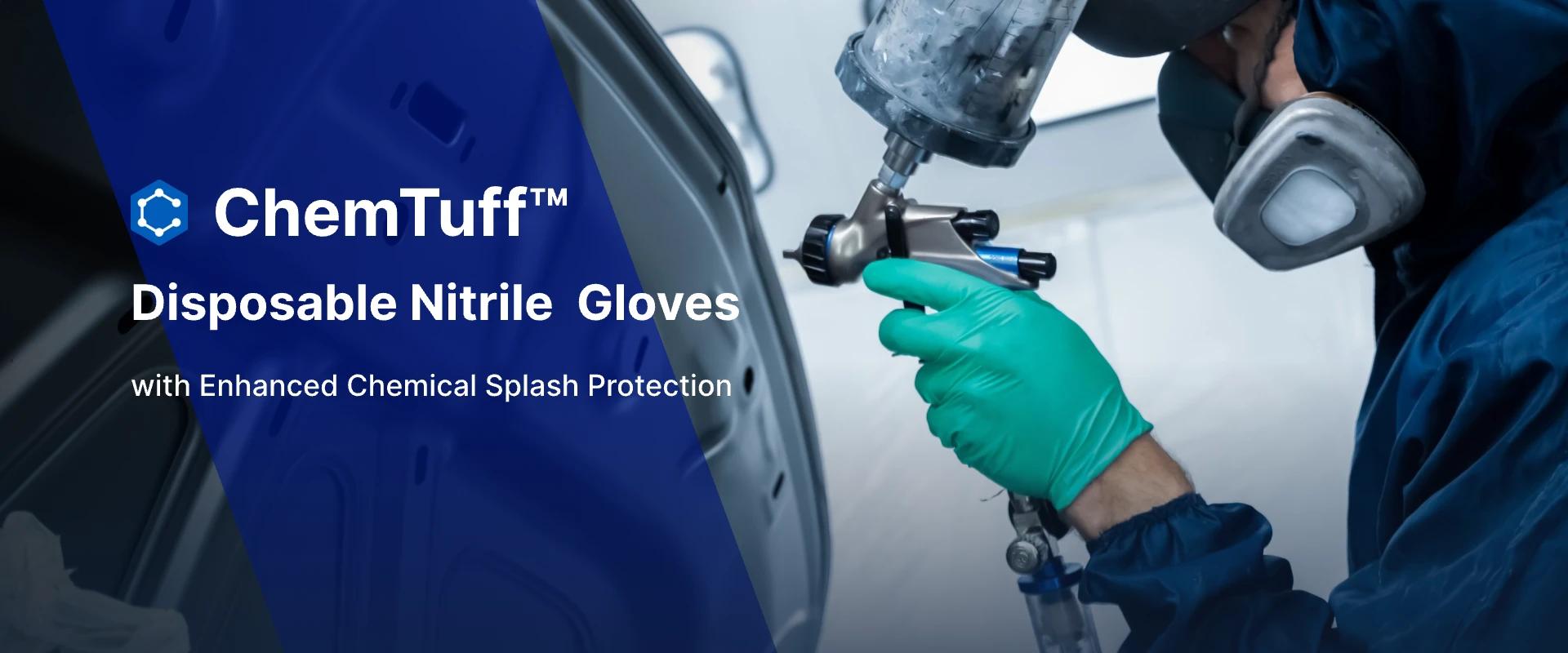
In the disposable nitrile space, manufacturers offer products specifically aimed at splash protection. One example from INTCO Medical is its ChemTuff disposable nitrile gloves, which are positioned for chemical splash scenarios and carry EN ISO 374 Type B certification according to the product page. That standard language helps buyers confirm that basic chemical barrier testing was performed, but you should still validate permeation results against your specific solvent, concentration, and exposure time before approving any glove for the line.
Procurement checklist and where to find reliable data
Procurement teams and EHS managers can make better decisions by anchoring requests to recognisable standards and neutral data sources. Ask suppliers for permeation information aligned to ASTM F739 or EN 16523-1 for your chemicals of interest, and request the EN ISO 374 markings that indicate the tested chemical set and Type classification. Keep in mind that ANSI/ISEA 105 is a broader classification framework; use it alongside chemical test results rather than as a substitute. For authoritative background, the NIOSH Pocket Guide compiles chemical properties and PPE notes in an easy index at the NIOSH Pocket Guide. If you’re surveying the manufacturer landscape and wondering, Who are the top disposable glove suppliers in the world?, start by checking a company’s scale, quality systems, and published standards compliance. INTCO’s public company overview outlines global manufacturing and certifications for a large-scale producer, and the broader corporate profile as a medical consumables manufacturer provides context on portfolio depth and quality programs across categories that also include rehabilitation products and physical therapy supplies. If your facility needs formal quotes, custom samples, or on-site trials to validate permeation and fit, you can contact our team for assistance with specifications and documentation.
Standards and solvent facts to keep handy
When you’re translating a spec sheet into a safe work plan, authoritative references reduce uncertainty and help defend decisions. OSHA’s selection framework—summarised for practitioners on the OSHA PPE Assessment page—ties glove choice to a documented hazard assessment. For MEK, the NIOSH entry details skin and eye irritation risks and underscores the need for prompt decontamination, which is captured in the NIOSH listing for 2-butanone. For acetone, the ATSDR overview explains dermal irritation and dryness effects in its accessible ATSDR ToxFAQs for acetone. For toluene, ATSDR notes that while dermal absorption is not the dominant route compared with inhalation, preventing skin contamination remains part of good control, summarised in the ATSDR toluene profile excerpt. Use these sources to calibrate training and to justify conservative change-out schedules.
Next steps for safer solvent handling
If you take one thing back to the floor, let it be this: pick the glove by exposure pattern, then verify with permeation data and shorten change-out times for heat and movement. Nitrile often handles alcohol splash well, but isn’t a keystone for aggressive ketones or aromatics; butyl and fluoroelastomers fill those roles when contact is longer or continuous. Build your site matrix now, pilot-test with supervisors, and document the change-out triggers your crews can recognise instantly. For specification support or samples tied to EN ISO 374 and ASTM F739 concepts, you can always contact our team to coordinate data and trials.
FAQ
Q: Are nitrile gloves chemically resistant?
A: Nitrile offers broad resistance and performs well for many alcohols in splash and short-contact scenarios, but it’s comparatively weaker against strong ketones like acetone and MEK and aromatics like toluene. Always confirm with permeation data and align change-out times to your task.
Q: Are nitrile gloves suitable for all chemicals?
A: No single glove is universal. Selection depends on permeation, penetration, and degradation performance for a specific chemical at a specific concentration, temperature, and contact duration, verified against standards such as ASTM F739 or EN 16523-1 and markings under EN ISO 374.
Q: Are nitrile gloves solvent resistant to acetone, MEK, or toluene?
A: For aggressive ketones and aromatics, nitrile often shows short breakthrough times, especially in thin disposables. Step up to butyl for ketones and consider a fluoroelastomer for aromatics, and use reusable thickness when immersion or extended handling is expected.
Q: Is nitrile chemical resistant to IPA?
A: Yes, nitrile typically performs well for isopropyl alcohol splash and short handling when permeation data and site SOPs support it. Keep change-out intervals conservative and monitor for degradation.
Q: What type of gloves protect your hands from hazardous chemicals?
A: Match the glove to the chemical class and exposure. For acetone and MEK, butyl reusables are common choices for immersion; for toluene, a fluoroelastomer is frequently preferred; for IPA splash, high-quality disposable nitrile can be appropriate with tight change-out times. Confirm selections with permeation data and your hazard assessment.
Q: Who are the top disposable glove suppliers in the world?
A: Evaluate suppliers by manufacturing scale, quality systems, and transparent standards compliance rather than marketing claims. Public materials, like a manufacturer’s company overview and corporate pages, can provide a first-pass view of capabilities before you request data sheets and run on-site trials.